
Direct Answer
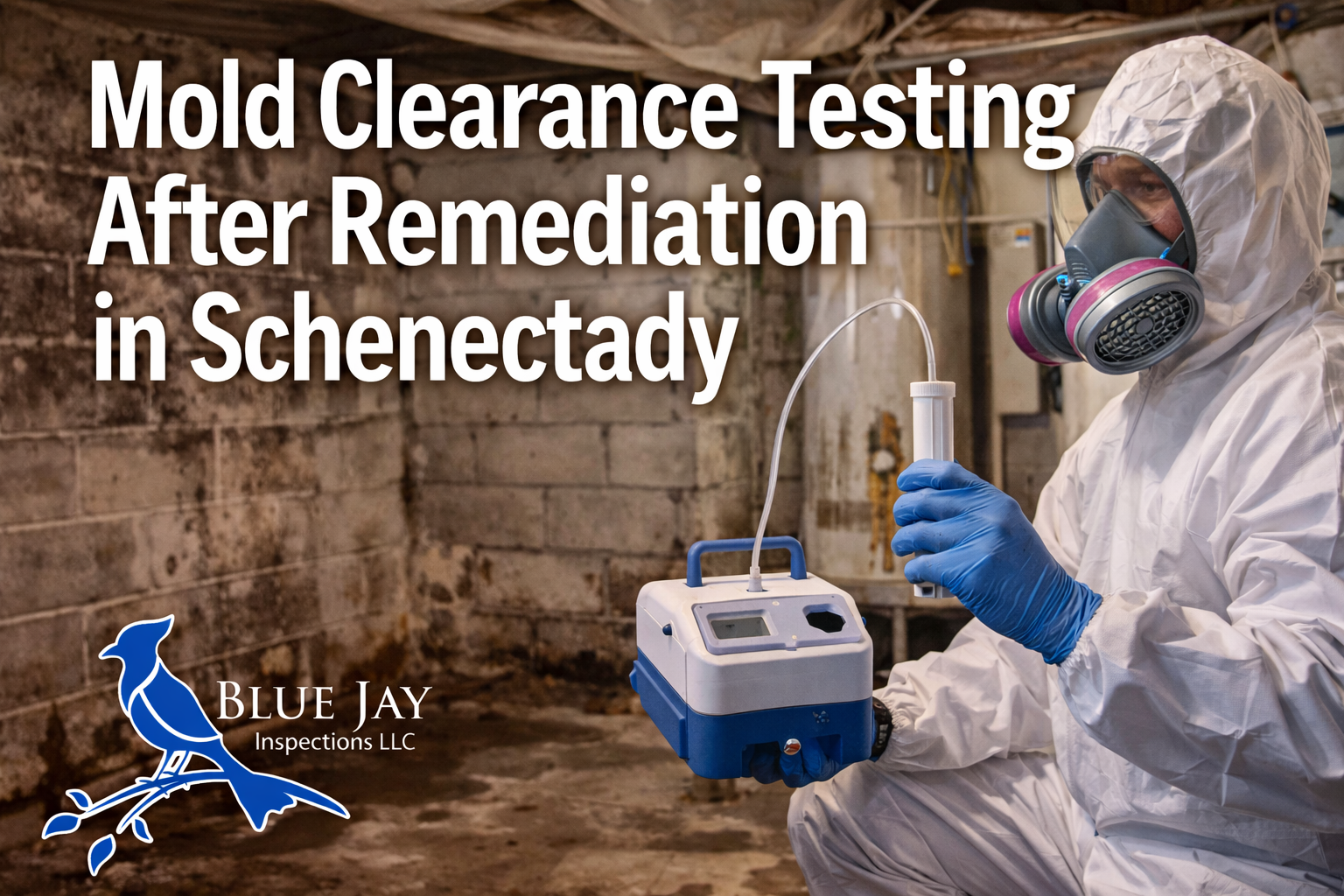
Mold clearance testing after remediation in Schenectady is a critical final step that verifies whether mold levels have been successfully reduced to safe, normal conditions. In New York, this process must be performed by a licensed, independent mold assessor (not the remediation contractor) and typically includes a visual inspection and air sampling to confirm the remediation was effective.
What Is Mold Clearance Testing?
Mold clearance testing—also called post-remediation verification (PRV)—is the process of evaluating a property after mold remediation to ensure the problem has been properly resolved.
This testing confirms:
- Mold growth has been removed
- Airborne spore levels are back to normal
- The area is safe for occupancy
In Schenectady and throughout New York State, this step is not optional for professional remediation—it is part of regulated mold work.
Why Mold Clearance Testing Is Required in New York
New York has strict mold laws under Article 32 of the NYS Labor Law, which require:
- Separation between remediation and assessment companies
- A written remediation plan
- Clearance testing performed by a licensed assessor
Key Rule:
The company that performs the mold remediation cannot perform the clearance testing.
This protects homeowners and buyers by ensuring unbiased results.
When Is Mold Clearance Testing Needed?
Clearance testing is typically required after:
- Professional mold remediation
- Water damage events (flooding, leaks, burst pipes)
- Visible mold contamination
- Real estate transactions involving prior mold issues
In Schenectady’s climate—where humidity, snowmelt, and older housing stock are common—moisture-related mold problems are not unusual.
What Does Mold Clearance Testing Involve?
1. Visual Inspection
The assessor first verifies:
- All visible mold has been removed
- Surfaces are clean and free of dust/debris
- No signs of ongoing moisture intrusion
If visible issues remain, the space will not pass clearance.
2. Moisture Evaluation
Since mold is driven by moisture, inspectors check:
- Humidity levels
- Damp materials
- Potential leak sources
If moisture is still present, mold can return—even if remediation was recently completed.
3. Air Sampling
Air testing is the most important part of clearance.
How it works:
- Samples are taken inside the remediated area
- A control sample is taken outside
- Lab analysis compares spore levels and types
Passing Criteria:
Indoor air should show:
- Similar or lower spore levels than outdoor air
- No elevated levels of problematic mold types
4. Surface Sampling (If Needed)
In some cases, additional testing may include:
- Swab samples
- Tape lifts
This is used when:
- There are questionable areas
- Clearance results are borderline
What Happens If a Property Fails Clearance?
If mold clearance testing fails, it means:
- Mold levels are still elevated
- Cleaning was incomplete
- Moisture issues were not fully resolved
Next Steps:
- Additional remediation may be required
- Areas may need to be re-cleaned or re-treated
- Moisture sources must be corrected
Clearance testing is then repeated until the property passes.
Common Reasons Mold Clearance Fails in Schenectady
1. Incomplete Remediation
- Missed contaminated materials
- Improper containment during cleanup
2. Poor Post-Remediation Cleaning
- Dust and spores left behind
- HVAC contamination not addressed
3. Ongoing Moisture Problems
- Basement water intrusion
- Roof or plumbing leaks
- High humidity levels
4. Cross-Contamination
- Spores spreading to other areas during remediation
How Long Does Mold Clearance Testing Take?
- On-site inspection: 30–90 minutes
- Lab results: Typically 24–48 hours
Some labs offer expedited results if needed for real estate deadlines.
Mold Clearance Testing and Real Estate in Schenectady
For homebuyers and sellers, clearance testing is often a deal-critical step.
Buyers:
- Confirms the issue was properly resolved
- Protects against future health and repair risks
Sellers:
- Provides documentation to reassure buyers
- Helps avoid delays or renegotiation
Real Estate Agents:
- Ensures compliance with NY regulations
- Keeps transactions moving forward
Why You Need a Licensed Mold Assessor
In New York, mold assessment and clearance must be performed by a licensed professional.
A qualified assessor will:
- Follow NYS regulations
- Provide unbiased testing
- Deliver clear, defensible reports
This is especially important in Schenectady, where older homes and basements are common sources of moisture issues.
Additional Testing Services to Consider
Depending on the situation, you may also want:
- Pre-remediation mold assessments
- Water quality testing (if contamination is suspected)
- Indoor air quality evaluations
- Moisture mapping and thermal imaging
How to Prepare for Mold Clearance Testing
To improve your chances of passing:
- Ensure remediation is fully completed
- Remove all containment barriers properly
- Clean all surfaces thoroughly
- Allow the area to dry completely
- Avoid running air scrubbers immediately before testing (unless advised)
Final Thoughts
Mold clearance testing after remediation in Schenectady is essential for confirming that your property is safe, clean, and ready for occupancy. With strict New York regulations and real estate implications, this step protects both buyers and sellers from future problems.
Skipping clearance testing—or using an unqualified provider—can lead to lingering contamination, failed transactions, and costly rework.