
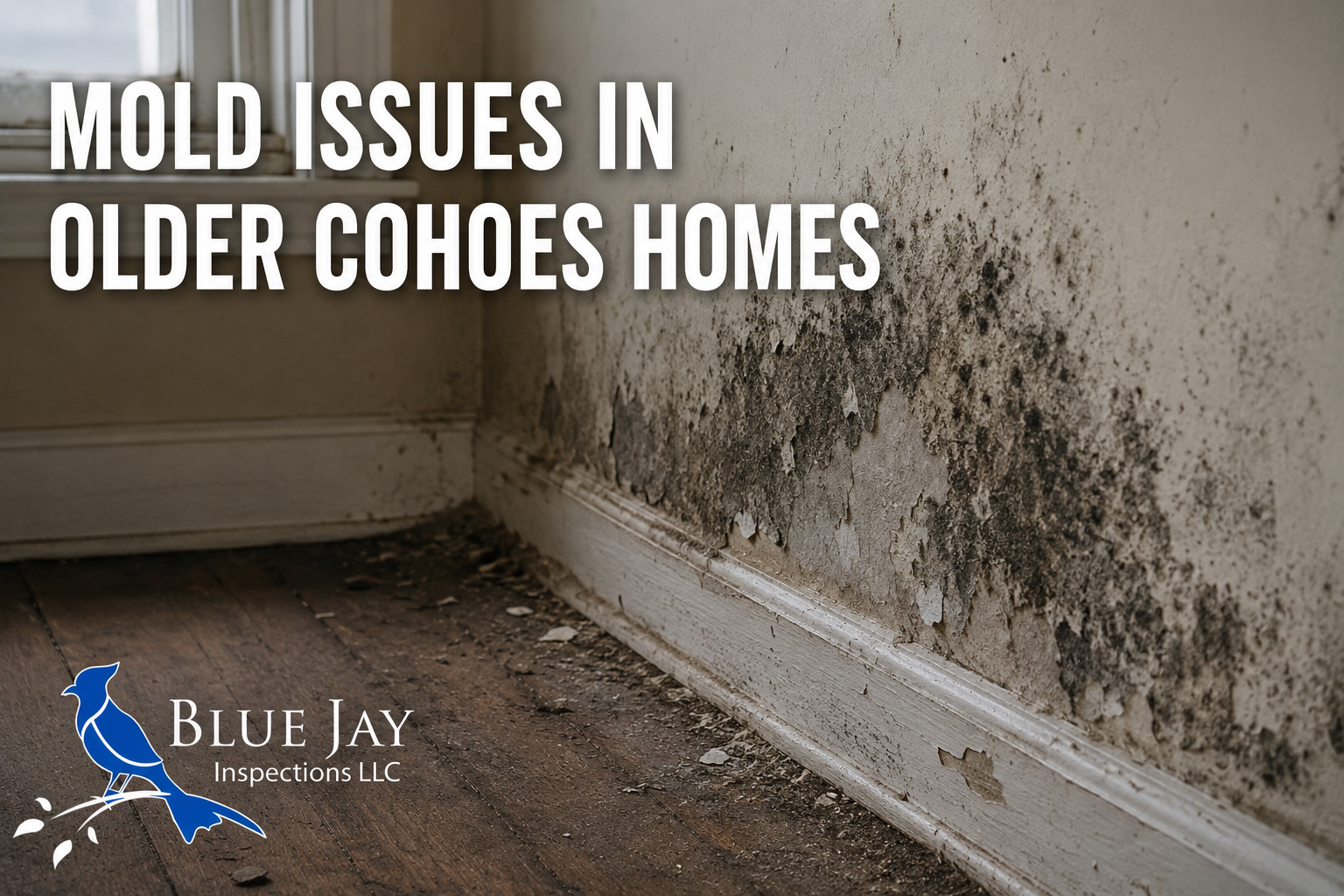
Mold Issues in Older Cohoes Homes: What Homebuyers and Homeowners Need to Know
Mold problems are common in many older homes throughout Cohoes, NY due to aging construction materials, historic basements, moisture intrusion, inadequate ventilation, and the region’s seasonal humidity. While some mold growth may be minor and manageable, other situations can indicate significant hidden moisture problems that may affect indoor air quality, structural materials, and overall property condition.
For homebuyers, sellers, landlords, and homeowners in Cohoes and the surrounding Capital Region, understanding how mold develops—and how professional mold assessments work—can help prevent expensive surprises and health concerns.
Why Older Homes in Cohoes Are More Vulnerable to Mold
Cohoes contains many historic and older homes built long before modern moisture management standards existed. While these homes often have unique character and craftsmanship, they may also contain conditions that allow mold growth to develop more easily.
Common contributing factors include:
- Stone or brick foundations
- Older basements with chronic moisture
- Limited vapor barriers
- Aging roofing systems
- Historic plumbing leaks
- Poor attic ventilation
- Original windows with condensation issues
- Older HVAC systems
- Deferred maintenance
- Seasonal humidity and freeze-thaw cycles
Many homes in Cohoes were constructed before modern waterproofing systems became standard, making moisture intrusion a common issue.
What Causes Mold in Homes?
Mold develops when three things are present:
| Requirement | Description |
|---|---|
| Moisture | Water intrusion, humidity, leaks, or condensation |
| Organic Material | Wood, drywall, insulation, dust, carpeting |
| Time | Moisture remains long enough for growth to begin |
Mold can begin growing within 24–48 hours under the right conditions.
The key issue is usually not the mold itself—but the moisture source causing it.
Common Areas Where Mold Is Found in Older Cohoes Homes
Basements
Basements are one of the most common mold-prone areas in older Capital Region homes.
Common basement moisture sources include:
- Foundation seepage
- High groundwater
- Poor exterior drainage
- Condensation on pipes
- Damp stone foundations
- Sump pump failures
Many older Cohoes homes have basements that were never designed to remain fully dry year-round.
Attics
Improper attic ventilation can trap heat and moisture, creating ideal conditions for mold growth.
Common causes include:
- Bathroom fans venting into the attic
- Roof leaks
- Inadequate soffit ventilation
- Blocked ridge vents
- Insufficient insulation
Attic mold is frequently discovered during home inspections.
Bathrooms
Bathrooms naturally generate high humidity.
Without proper exhaust ventilation, moisture accumulates on:
- Ceilings
- Grout
- Caulking
- Drywall
- Window frames
Crawlspaces
Some homes in older neighborhoods have crawlspaces with poor ventilation and exposed soil moisture.
These areas can support mold growth that affects the entire home through air movement.
Signs of Possible Mold Problems
Not all mold is immediately visible. Some warning signs include:
Musty Odors
Persistent earthy or damp smells often indicate hidden moisture or mold growth.
Water Stains
Discoloration on ceilings, walls, or floors may suggest past or active leaks.
Peeling Paint or Bubbling Drywall
Moisture trapped behind surfaces can cause finishes to deteriorate.
Condensation Issues
Excessive window condensation may indicate elevated indoor humidity.
Visible Growth
Mold may appear:
- Black
- Green
- White
- Gray
- Brown
- Fuzzy or powdery
Color alone does not determine the type or severity of mold.
Mold and Real Estate Transactions in Cohoes, NY
Why Mold Matters for Homebuyers
Mold concerns can affect:
- Indoor air quality
- Repair costs
- Insurance considerations
- Financing
- Future resale value
A home may look cosmetically updated while hidden moisture issues remain behind walls or under flooring.
Why Sellers Should Address Mold Early
Known mold issues can delay or complicate transactions.
Pre-listing evaluations can help:
- Reduce surprises
- Improve buyer confidence
- Identify needed repairs
- Support smoother negotiations
Why Realtors Recommend Mold Assessments
Professional mold assessments provide objective information that helps buyers and sellers make informed decisions.
What Is a Mold Assessment?
In New York State, mold assessments and remediation are legally separate services.
A mold assessment involves evaluating the property for:
- Moisture sources
- Visible growth
- Conditions conducive to mold
- Indoor air quality concerns
- Areas requiring remediation
The assessment may include:
- Moisture meter testing
- Thermal imaging
- Humidity measurements
- Air sampling
- Surface sampling
- Written protocols for remediation if necessary
What Is Mold Remediation?
Mold remediation is the process of removing mold contamination and correcting the moisture source.
This may involve:
- Containment procedures
- HEPA filtration
- Removal of contaminated materials
- Cleaning and disinfecting surfaces
- Drying affected areas
Simply painting over mold or spraying bleach on surfaces does not properly resolve most mold problems.
Why Moisture Control Matters More Than Surface Cleaning
Many homeowners focus only on visible mold, but mold usually returns if the underlying moisture problem is not corrected.
Long-term prevention may require:
- Foundation drainage improvements
- Roof repairs
- Plumbing repairs
- Ventilation upgrades
- Dehumidification
- Exterior grading corrections
- Insulation improvements
The moisture source is the real issue.
Can Mold Affect Indoor Air Quality?
Yes. Some mold growth can affect indoor air quality, especially when growth is extensive or moisture problems are ongoing.
Potential concerns may include:
- Musty odors
- Allergic reactions
- Respiratory irritation
- Elevated humidity levels
However, not all mold situations present the same level of concern.
A professional mold assessment helps determine the severity and scope of the issue.
Are Older Homes in Cohoes Safe to Buy?
Absolutely. Many older homes in Cohoes are excellent properties with strong construction and historic charm.
The key is understanding the home’s condition before purchase.
A thorough inspection and mold assessment can help buyers:
- Understand existing conditions
- Budget for repairs
- Identify moisture risks
- Make informed decisions
Older homes simply require more careful evaluation.
Mold Prevention Tips for Homeowners
Control Indoor Humidity
Maintain indoor humidity ideally below 50%.
Use Exhaust Fans
Always vent bathrooms and kitchens properly.
Address Leaks Quickly
Even small plumbing leaks can create major mold problems over time.
Improve Basement Moisture Control
Use dehumidifiers and maintain proper drainage around the home.
Monitor Attic Ventilation
Ensure attic airflow remains unobstructed.
Why Choose Blue Jay Inspections for Mold Assessments in Cohoes, NY?
Blue Jay Inspections provides professional NYS mold assessments and clearances throughout:
- Cohoes
- Troy
- Watervliet
- Albany
- Schenectady
- Clifton Park
- Saratoga Springs
- Bethlehem
- Colonie
- East Greenbush
- Waterford
- Malta
- Niskayuna
- Rotterdam
- And surrounding Capital Region communities
Services include:
- Home inspections
- NYS mold assessments
- Mold clearance testing
- Water quality testing
- Sewer scope inspections
- Septic inspections
- Termite/WDI inspections
- Well flow testing
Blue Jay Inspections helps clients identify moisture and mold concerns with professional, unbiased evaluations.
Final Thoughts
Mold issues in older Cohoes homes are often tied to long-term moisture conditions, aging construction materials, and ventilation challenges common in historic properties.
The good news is that most mold issues can be identified, managed, and corrected when properly evaluated.
Whether you are buying, selling, or maintaining an older home in Cohoes, a professional mold assessment can provide valuable information and peace of mind.