
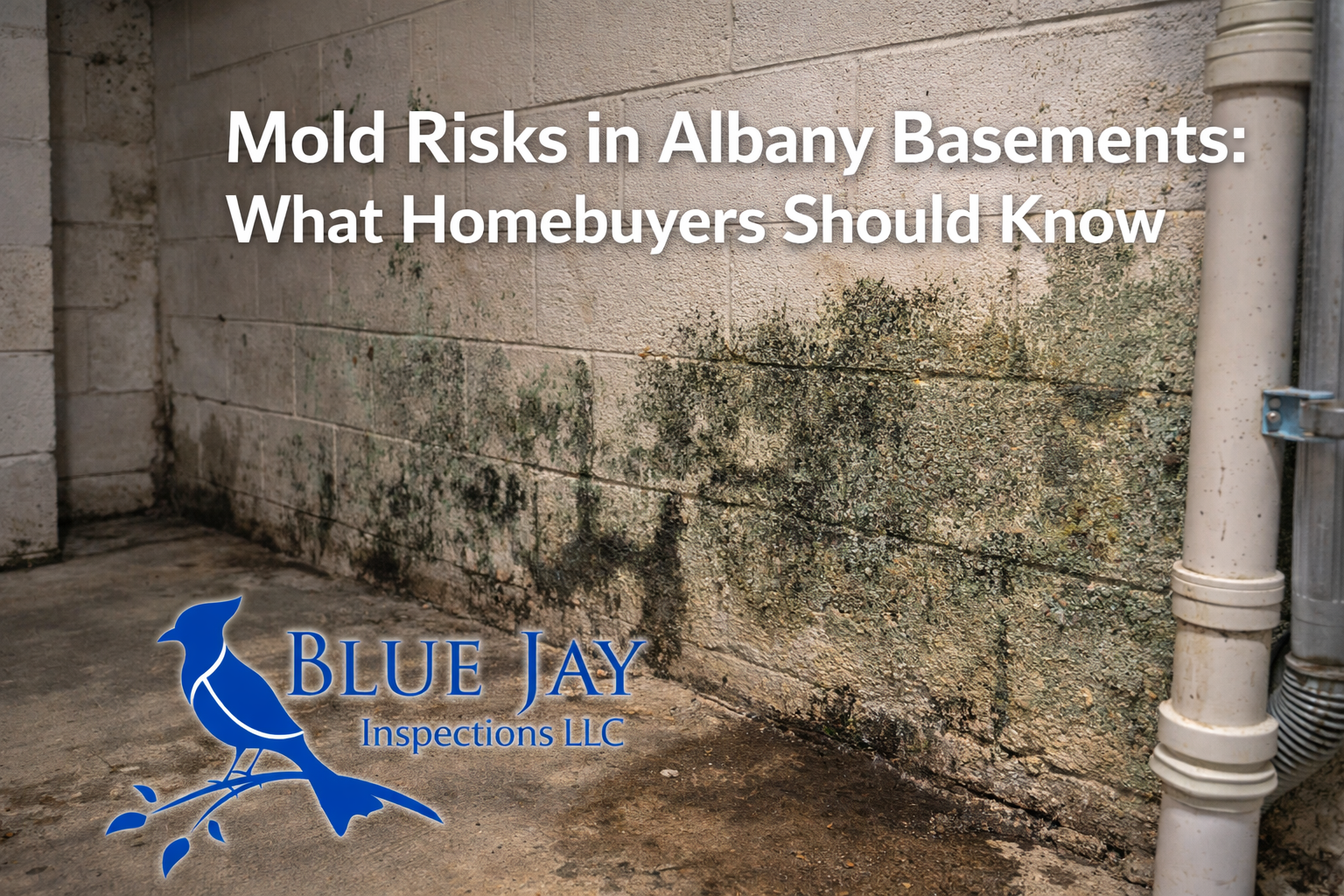
The Short Answer
Basements in Albany and the greater Capital Region are especially prone to mold due to high groundwater levels, seasonal moisture swings, older housing stock, and frequent humidity. Homebuyers should always evaluate moisture conditions, ventilation, and past water intrusion—and strongly consider a professional mold assessment before closing.
Why Mold Is a Common Problem in Albany-Area Basements
Albany, Schenectady, Troy, Saratoga Springs, and surrounding communities like Colonie, Guilderland, Bethlehem, Niskayuna, Clifton Park, Malta, and East Greenbush all share environmental and structural factors that increase mold risk.
1. High Water Tables and Clay-Heavy Soils
Much of the Capital Region sits on soil that retains water. Areas like:
- Cohoes, Watervliet, Rensselaer, Waterford
- Rotterdam, Scotia, Glenmont, Selkirk
- Halfmoon, Ballston Spa, Round Lake
…often experience slow drainage, which leads to:
- Hydrostatic pressure against foundation walls
- Water seepage through cracks or joints
- Chronic dampness in basements
2. Seasonal Freeze-Thaw Cycles
Upstate New York winters cause soil expansion and contraction. This can:
- Widen foundation cracks over time
- Allow water intrusion during spring thaw
- Create ideal mold conditions once temperatures rise
3. Older Housing Stock
Many homes in Albany, Troy, Schenectady, and Johnstown were built decades ago and may have:
- Stone or block foundations
- Minimal waterproofing systems
- Outdated or nonexistent drainage
These features make moisture control more difficult compared to modern construction.
4. Humid Summers
Even without visible leaks, summer humidity in areas like Saratoga Springs, Clifton Park, and Latham can:
- Raise basement humidity above 60%
- Trigger mold growth on organic materials like wood, drywall, and stored items
Where Mold Typically Develops in Basements
Mold is not always obvious. It often develops in hidden or overlooked areas:
Common Problem Areas
- Behind finished basement walls
- Under carpeting or laminate flooring
- Around sump pumps and floor drains
- Near foundation cracks or wall penetrations
- On sill plates and rim joists
- Around HVAC systems and ductwork
Warning Signs to Watch For
- Musty or earthy odors
- Efflorescence (white powder on walls)
- Peeling paint or bubbling drywall
- Dark staining or discoloration
- Past water marks or tide lines
Why Mold Matters for Homebuyers
Health Concerns
Mold exposure can affect occupants differently, but common issues include:
- Respiratory irritation
- Allergic reactions
- Asthma aggravation
Financial Impact
Mold problems can lead to:
- Costly remediation (often $2,000–$10,000+)
- Reduced property value
- Delays in financing or closing
Hidden Liability
A finished basement in areas like Delmar, Slingerlands, Voorheesville, or Loudonville may look clean—but mold can exist behind walls, especially if moisture issues were covered up rather than fixed.
What a Home Inspection Will—and Won’t—Reveal
A standard home inspection (like those performed throughout Albany County, Saratoga County, and Schenectady County) includes:
- Visual evaluation of moisture intrusion
- Identification of conditions conducive to mold
- Reporting of visible mold-like substances
However, it does NOT include:
- Air or surface sampling
- Lab analysis
- Formal mold identification
When to Get a Mold Assessment
A NYS Licensed Mold Assessment is recommended when:
- There is a musty odor with no visible source
- The basement has a history of water intrusion
- The home has a finished basement
- You see staining or suspect hidden growth
- The home has been vacant
This is especially important in areas like:
- Altamont, New Scotland, Galway (rural homes with wells/septic)
- Gloversville, Johnstown (older homes)
- North Greenbush, East Greenbush (mixed soil conditions)
What a Professional Mold Assessment Includes
A licensed inspector will typically perform:
Visual and Moisture Evaluation
- Moisture meter readings
- Thermal imaging (when needed)
- Identification of water entry points
Air and Surface Sampling
- Indoor vs. outdoor spore comparison
- Lab-certified results
Clearance Testing (if remediation is done)
- Ensures mold has been properly removed
- Required for documentation in many real estate transactions
Additional Basement Tests to Consider
For a complete risk evaluation in the Albany region, buyers should also consider:
| Service | Why It Matters in Upstate NY |
|---|---|
| Water Quality Testing | Common in homes with wells (Galway, Altamont, New Scotland) |
| Sewer Scope | Older sewer lines in Albany, Troy, Schenectady |
| Septic Inspection | Rural properties in Saratoga & Fulton counties |
| Well Flow Testing | Ensures adequate water supply |
| Termite/WDI Inspection | Moist environments increase risk |
How to Reduce Mold Risk After Purchase
If you move forward with a home, proactive steps can significantly reduce risk:
Moisture Control
- Install or maintain a sump pump
- Ensure proper grading away from foundation
- Extend downspouts at least 6 feet
Humidity Management
- Use a dehumidifier (keep humidity below 50%)
- Seal basement air leaks
Waterproofing Improvements
- Interior drainage systems if needed
- Foundation crack sealing
- Vapor barriers in unfinished basements
Key Takeaways for Capital Region Buyers
- Mold risk is very common in Albany-area basements due to climate and soil conditions
- Many issues are hidden, especially in finished basements
- A standard home inspection is not enough to fully evaluate mold
- A professional mold assessment provides clarity and protects your investment
Schedule a Mold Assessment with Blue Jay Inspections
Blue Jay Inspections provides NYS Licensed Mold Assessments and Clearances across:
Albany, Schenectady, Troy, Saratoga Springs, Clifton Park, Malta, Colonie, Guilderland, Bethlehem, Niskayuna, East Greenbush, Rotterdam, Scotia, Glenmont, Delmar, Voorheesville, Loudonville, Latham, Cohoes, Watervliet, Waterford, Halfmoon, Ballston Spa, Round Lake, Galway, Altamont, New Scotland, Gloversville, Johnstown, and surrounding communities.
If you’re buying a home, don’t guess—test and verify.