
Why You Need to Know the Signs
A failing septic system is one of the most expensive and disruptive problems a homeowner can face. Unfortunately, many septic system failures begin with subtle warning signs that are easy to overlook until a major issue develops.
The short answer is simple: common signs of septic system failure include slow drains, sewage odors, standing water in the yard, lush patches of grass over the drain field, plumbing backups, and gurgling fixtures. Recognizing these warning signs early can help homeowners avoid costly repairs and protect their property, health, and investment.
For homeowners and home buyers in Gloversville, Johnstown, Broadalbin, Mayfield, Caroga Lake, and throughout Fulton County, understanding the symptoms of septic system problems is an important part of maintaining a home with a private wastewater system.
Why Septic Systems Fail
A septic system is designed to collect, treat, and disperse wastewater from a home. When properly installed and maintained, many systems can operate for decades.
However, several factors can contribute to system failure, including:
- Lack of routine maintenance
- Excessive water usage
- Aging components
- Drain field damage
- Tree root intrusion
- Improper installation
- Groundwater infiltration
- Physical damage from vehicles or construction
The earlier problems are identified, the more options homeowners often have for repairs.
The Most Common Warning Signs of Septic System Failure
Slow Drains Throughout the Home
One slow drain may indicate a localized plumbing issue.
However, when multiple fixtures begin draining slowly at the same time, it may indicate a septic system problem.
Pay attention to:
- Slow sinks
- Slow tubs
- Slow showers
- Delayed toilet flushing
If several drains are affected simultaneously, the septic system may be struggling to process wastewater.
Sewage Odors Around the Property
A properly functioning septic system should not produce noticeable sewage odors.
Persistent odors near:
- The septic tank
- The drain field
- The yard
- The home itself
can indicate system problems.
Common causes include:
- Tank overload
- Drain field saturation
- Leaking components
- Venting issues
Sewage odors should never be ignored.
Standing Water Near the Drain Field
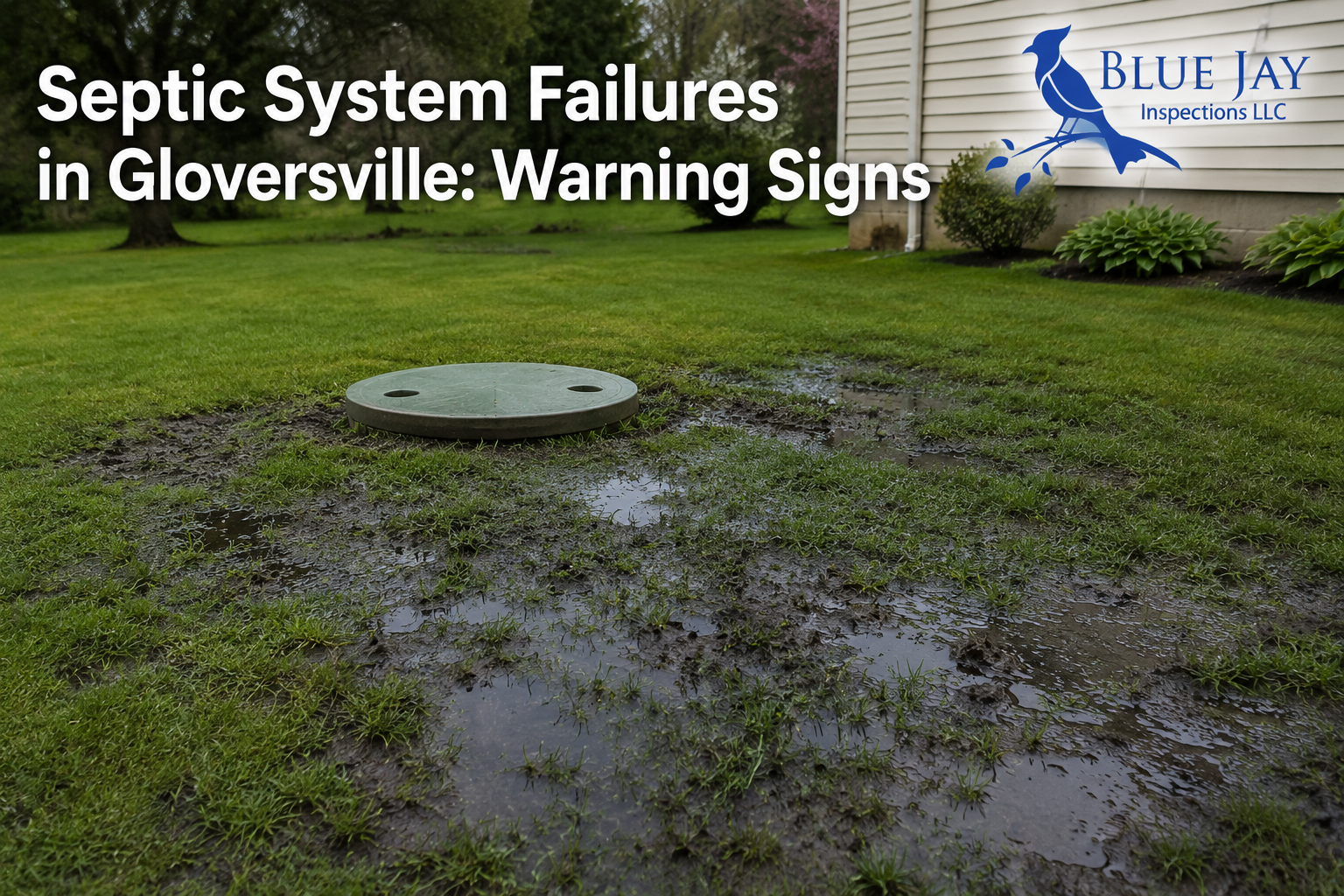
One of the most visible signs of septic failure is water collecting near the drain field.
Watch for:
- Wet spots
- Puddles
- Muddy areas
- Soft ground
especially during dry weather.
These conditions may indicate that wastewater is no longer being properly absorbed and treated underground.
Unusually Green or Fast-Growing Grass
Many homeowners assume healthy grass is a good thing.
However, an unusually green patch of grass over the drain field may signal trouble.
When wastewater rises closer to the surface, it can act as fertilizer and promote excessive growth.
If portions of the yard appear significantly greener than surrounding areas, further evaluation may be warranted.
Plumbing Backups
A sewage backup is often one of the clearest indications of septic system failure.
Homeowners may experience:
- Toilets backing up
- Wastewater returning through drains
- Sewage entering tubs or showers
These situations require immediate attention.
Backups can create significant health hazards and property damage.
Gurgling Sounds from Plumbing Fixtures
Gurgling sounds may indicate air movement caused by drainage restrictions or system problems.
Listen for unusual noises in:
- Toilets
- Sinks
- Showers
- Bathtubs
While gurgling can sometimes be related to plumbing issues, it can also signal developing septic concerns.
Frequent Need for Pumping
Routine septic pumping is a normal part of system maintenance.
However, if a tank requires pumping much more frequently than expected, it may indicate:
- Drain field failure
- Excessive solids accumulation
- System design issues
- Hydraulic overload
Frequent pumping often addresses symptoms rather than the underlying problem.
Warning Signs Inside the Home
Some septic failures first appear indoors.
Persistent Drain Problems
Recurring drain issues throughout the home should not be dismissed as simple clogs.
Sewage Odors Indoors
Odors inside bathrooms, basements, or utility areas may indicate wastewater system concerns.
Water Backing Up in Lower Fixtures
Fixtures located at lower elevations often show symptoms first.
This can include:
- Basement drains
- First-floor showers
- Lower-level sinks
Warning Signs Outside the Home
Outdoor symptoms often become more noticeable as problems worsen.
Drain Field Saturation
A saturated drain field may appear:
- Wet
- Spongy
- Muddy
- Sunken
Surface Wastewater
Wastewater should never be visible above ground.
Surface discharge often indicates a serious system failure.
Increased Insect Activity
Standing wastewater may attract:
- Mosquitoes
- Flies
- Other insects
Unusual insect activity near the drain field may warrant further investigation.
Septic System Failures Commonly Found in Fulton County
Aging Systems
Many homes throughout Gloversville and surrounding communities have septic systems that are decades old.
Older systems may have:
- Deteriorated tanks
- Aging drain fields
- Outdated designs
Heavy Rainfall and Groundwater Issues
Seasonal weather conditions can affect septic performance.
High groundwater levels may reduce a drain field’s ability to absorb wastewater.
Lack of Maintenance
One of the leading causes of septic failure is neglecting routine pumping and inspections.
Regular maintenance can significantly extend system life.
Tree Root Intrusion
Roots can damage:
- Pipes
- Distribution boxes
- Septic tanks
Large trees near septic components should be monitored carefully.
How Often Should Septic Systems Be Inspected?
Most professionals recommend regular inspections based on:
- Household size
- System age
- Usage patterns
Many homeowners benefit from inspections every few years, even if no problems are apparent.
A professional inspection can identify developing issues before they become expensive failures.
What Home Buyers Should Know
If you’re purchasing a home in Gloversville with a private septic system, a dedicated septic inspection is strongly recommended.
A standard home inspection generally cannot determine:
- Tank condition
- Sludge levels
- Drain field performance
- Hidden septic defects
A separate septic inspection can provide valuable information before closing.
How Much Can Septic Failures Cost?
Repair costs vary significantly depending on the issue.
| Problem | Potential Cost Range |
|---|---|
| Tank Pumping | $300–$700 |
| Baffle Repair | $300–$1,500 |
| Distribution Box Repair | $500–$2,500 |
| Pump Replacement | $1,000–$4,000 |
| Drain Field Repair | $3,000–$10,000+ |
| Full System Replacement | $10,000–$30,000+ |
Identifying problems early often results in lower repair costs.
How to Help Prevent Septic System Failure
Homeowners can reduce the risk of failure by:
- Scheduling regular pumping
- Conserving water
- Avoiding grease disposal down drains
- Keeping vehicles off the drain field
- Managing tree growth near septic components
- Scheduling periodic inspections
Preventive maintenance is typically far less expensive than major repairs.
When to Schedule a Professional Septic Inspection
If you notice any of the warning signs discussed above, professional evaluation is recommended.
Early detection can help homeowners:
- Avoid costly repairs
- Protect property value
- Prevent health hazards
- Extend system lifespan
The sooner problems are identified, the more options may be available for corrective action.
Schedule a Septic Inspection in Gloversville, NY
Blue Jay Inspections provides professional septic inspections for homeowners, home buyers, sellers, and real estate professionals throughout Gloversville and surrounding Fulton County communities.
Whether you’re experiencing warning signs of septic failure or simply want peace of mind before buying a home, our inspections provide valuable information about the condition of your septic system.
Contact Blue Jay Inspections today to schedule your septic inspection in Gloversville, NY.