
Septic Issues
Septic system problems can turn a dream home into a major financial burden. In Saratoga County homes, warning signs like slow drains, sewage odors, wet yards, and aging systems should never be ignored during a real estate transaction.
Whether you’re buying a home in Saratoga Springs, Ballston Spa, Malta, Clifton Park, Galway, Milton, or surrounding communities, understanding septic system red flags can help you avoid expensive repairs, environmental hazards, and failed closings.
Why Septic Systems Matter in Saratoga County
Many homes throughout Saratoga County and the Capital Region rely on private septic systems instead of municipal sewer connections. Unlike public sewer systems, septic systems require ongoing maintenance and can fail without obvious warning signs.
A failing septic system can lead to:
- Costly repairs or replacement
- Contaminated groundwater
- Property damage
- Health hazards
- Mortgage and insurance complications
In Upstate New York, harsh winters, clay-heavy soils, groundwater conditions, and aging infrastructure can all contribute to septic issues.
What Is a Septic System?
A residential septic system typically includes:
| Component | Purpose |
|---|---|
| Septic Tank | Separates solids from wastewater |
| Distribution Box | Directs wastewater evenly |
| Drain Field (Leach Field) | Filters and disperses wastewater into soil |
| Pipes & Plumbing | Carry wastewater from the home |
When any component begins failing, the entire system can become compromised.
Common Septic System Red Flags
1. Slow Drains Throughout the House
One slow sink may simply be a clog.
However, if multiple fixtures drain slowly at the same time, it could indicate:
- A full septic tank
- Drain field saturation
- Pipe blockages
- System failure
This is one of the earliest warning signs inspectors frequently encounter in Saratoga County homes.
2. Sewage Odors Indoors or Outdoors
A healthy septic system should not produce noticeable odors.
Strong smells near:
- Basement drains
- Bathrooms
- The septic tank area
- The yard or drain field
may indicate:
- Tank overflow
- Venting problems
- Drain field failure
- Leaks in the system
Persistent odors are a major red flag during home inspections.
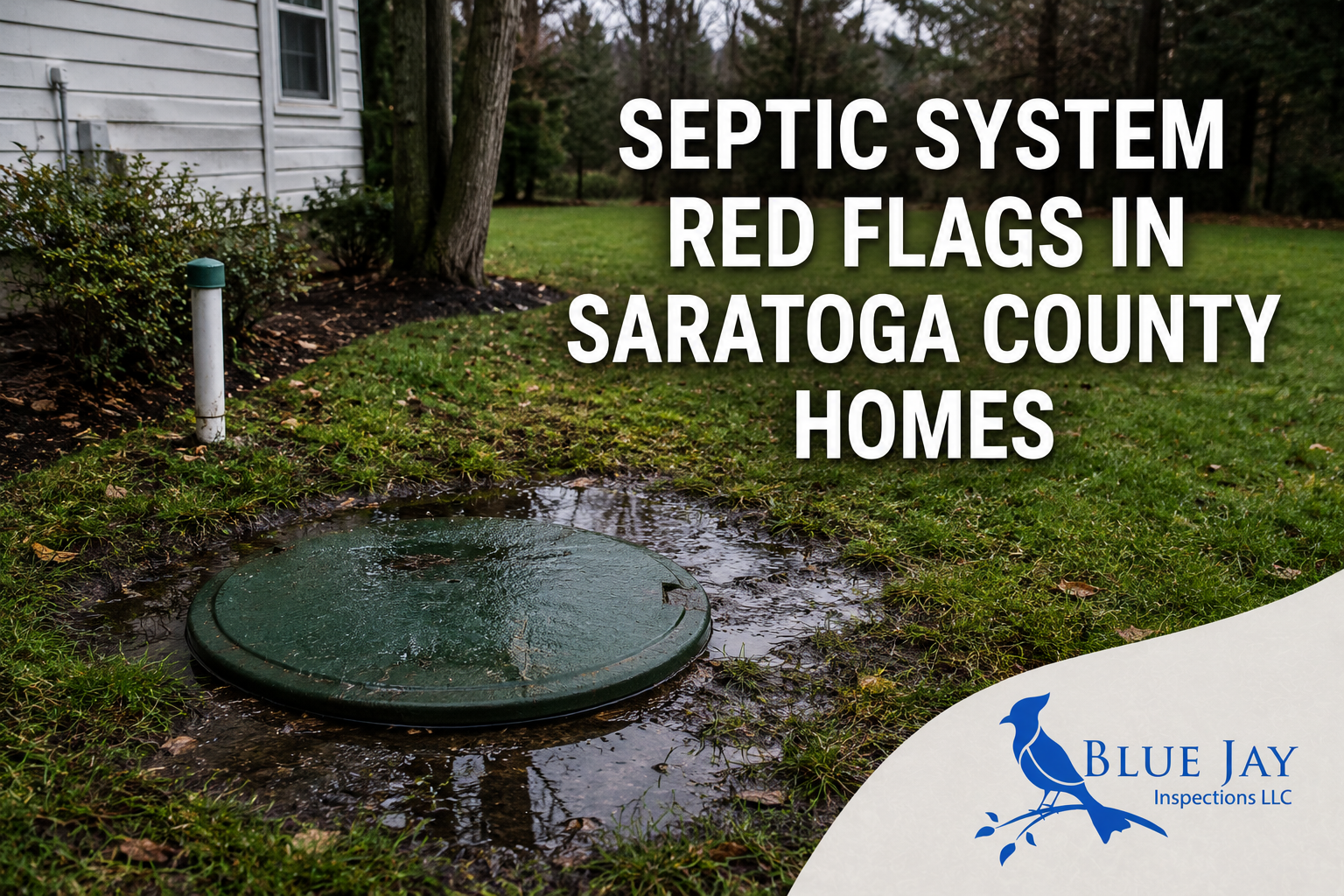
3. Wet or Soggy Areas in the Yard
Pooling water near the septic area often indicates wastewater is no longer being properly absorbed.
Watch for:
- Spongy ground
- Standing water
- Unusually green grass patches
- Muddy areas during dry weather
In Saratoga County, seasonal snowmelt and groundwater conditions can make these symptoms more noticeable.
4. Older Septic Systems
Age alone does not mean failure—but it significantly increases risk.
Many older homes in areas like:
- Ballston Spa
- Galway
- Charlton
- Greenfield
- Milton
may still have aging septic systems nearing the end of their service life.
Typical lifespan estimates:
- Conventional systems: 20–40 years
- Steel tanks: Often shorter due to corrosion
Older systems may not meet current standards or household demands.
5. Lack of Maintenance Records
One of the biggest concerns during real estate transactions is missing documentation.
Buyers should ask:
- When was the tank last pumped?
- Has the system ever failed?
- Are repairs documented?
- Is the location of the tank and drain field known?
No maintenance history increases uncertainty and risk.
6. Frequent Plumbing Backups
Recurring backups are never normal.
Symptoms may include:
- Toilets bubbling or gurgling
- Wastewater backing into tubs or sinks
- Basement drain backups
This often indicates severe septic restrictions or drain field problems.
7. Trees Growing Near the Septic Area
Tree roots can infiltrate:
- Septic pipes
- Distribution boxes
- Drain fields
Root intrusion is common in mature Saratoga County properties with extensive landscaping.
Certain species are particularly aggressive around septic systems.
8. Drain Field Located in Poor Soil Conditions
Not all soils absorb wastewater effectively.
In parts of Saratoga County:
- Clay-heavy soil
- High groundwater tables
- Poor drainage conditions
can reduce drain field performance and increase failure risk.
This is especially important in rural and semi-rural properties.
9. DIY Repairs or Improper Modifications
Inspectors sometimes discover:
- Unpermitted repairs
- Improper piping
- Makeshift drain field extensions
These shortcuts may temporarily mask issues while creating larger long-term problems.
10. Septic Systems Near Wells
Homes with both private wells and septic systems require careful spacing and evaluation.
A failing septic system can potentially contaminate:
- Drinking water wells
- Groundwater supplies
This is why many buyers schedule:
- Septic inspections
- Water quality testing
- Well flow testing
together during due diligence.
What Happens During a Septic Inspection?
A professional septic inspection may include:
Tank Evaluation
- Tank condition
- Sludge levels
- Signs of leaks or structural damage
Drain Field Assessment
- Saturation issues
- Ponding water
- Proper wastewater distribution
Functional Testing
- Water flow evaluation
- System response under load
Visual Inspection
- Exposed components
- Risers and covers
- Safety concerns
Why Septic Problems Are Expensive
Septic repairs can range from minor fixes to full system replacement.
Approximate costs may include:
| Issue | Potential Cost Range |
|---|---|
| Tank pumping | Relatively low |
| Baffle repair | Moderate |
| Drain field replacement | Very expensive |
| Full system replacement | Major investment |
This is why septic inspections are critical before closing.
Red Flags Buyers Should Never Ignore
The most serious septic warning signs include:
- Active sewage odors
- Standing wastewater
- Recent unexplained landscaping over drain fields
- Backup history
- Failed prior inspections
- Seller unwillingness to provide records
These issues deserve immediate professional evaluation.
Tips for Sellers Before Listing
Sellers can improve buyer confidence by:
- Pumping the tank before listing
- Gathering maintenance records
- Addressing known issues early
- Scheduling a pre-listing septic inspection
This can help reduce negotiation problems and closing delays.
Additional Inspection Services Often Recommended
For homes in Saratoga County, buyers often bundle septic inspections with:
- Home inspections
- Well flow testing
- Water quality testing
- Sewer scope inspections
- Mold assessments
- Termite/WDI inspections
A complete evaluation provides a more accurate picture of the property.
Service Areas Throughout Saratoga County & Beyond
Blue Jay Inspections provides septic inspections throughout:
- Saratoga Springs
- Ballston Spa
- Malta
- Clifton Park
- Round Lake
- Galway
- Milton
- Halfmoon
- Waterford
- Albany
- Schenectady
- Troy
- Guilderland
- Niskayuna
- East Greenbush
- Rotterdam
- Colonie
- And surrounding towns and rural communities across the Capital Region
Final Thoughts
Septic systems are one of the most expensive hidden risks in residential real estate. In Saratoga County homes, recognizing septic red flags early can save buyers from major financial and environmental problems.
If you’re buying, selling, or representing a property with a private septic system, a professional septic inspection is one of the smartest investments you can make.