
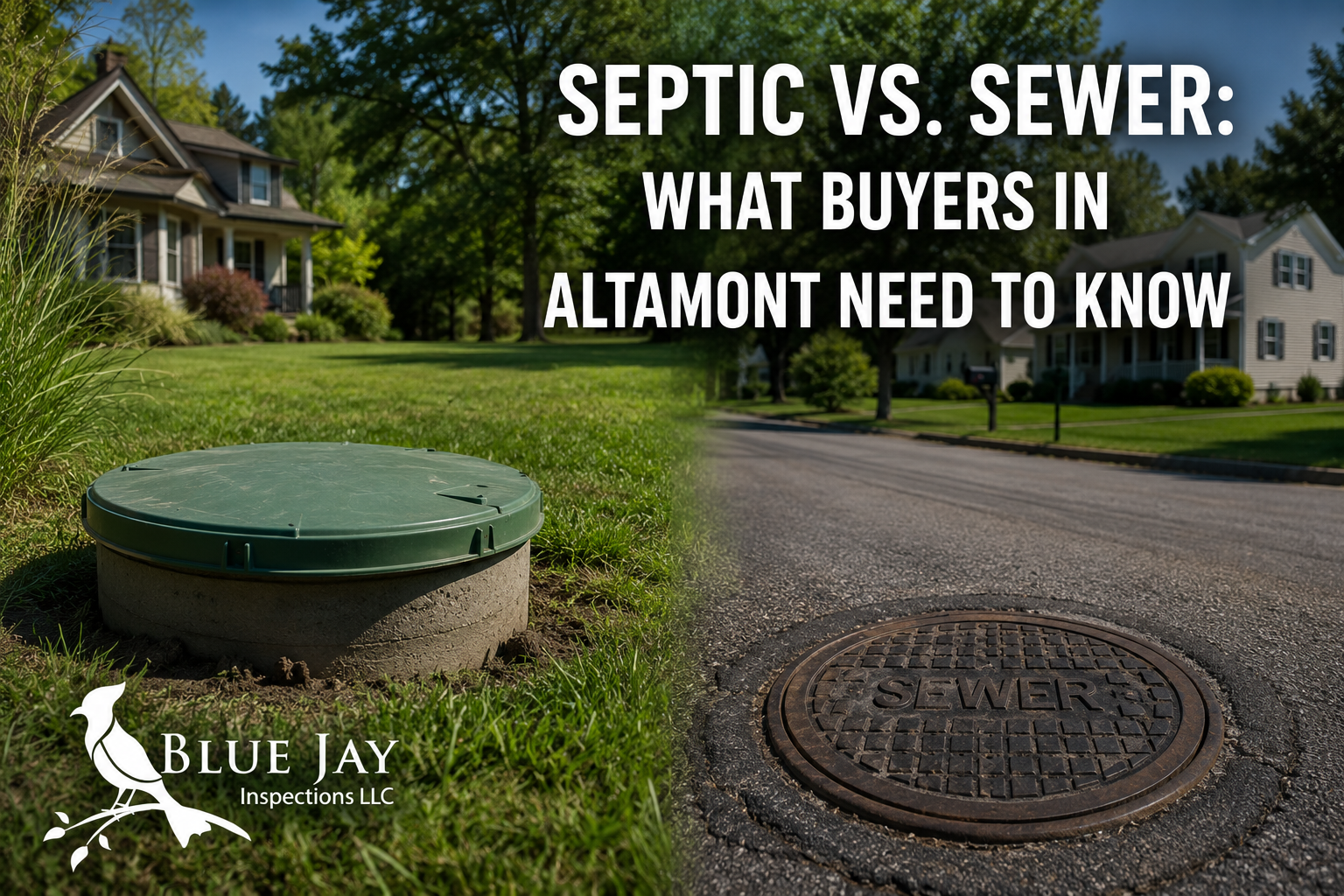
Does It Matter?
One of the most important questions home buyers in Altamont should ask is whether a property uses a private septic system or municipal sewer connection. The answer affects maintenance responsibilities, inspection requirements, long-term costs, and potential repair risks.
In Altamont and surrounding areas of Albany County, buyers may encounter both systems depending on the location and age of the property. Understanding the differences between septic and sewer systems can help buyers avoid unexpected expenses and make informed purchasing decisions.
Whether you’re purchasing a rural property in Altamont, Knox, or Berne—or a more suburban home near Guilderland or Voorheesville—knowing how wastewater is handled is critical during the home inspection process.
What’s the Difference Between Septic and Sewer?
Municipal Sewer Systems
Homes connected to a public sewer system send wastewater through underground municipal pipes to a centralized treatment facility.
Homeowners are generally responsible for:
- Plumbing inside the home
- Sewer line from the home to the municipal connection point
The municipality handles treatment and maintenance of the public sewer infrastructure.
Private Septic Systems
A septic system is a private onsite wastewater treatment system typically used in rural or semi-rural properties.
A typical septic system includes:
- Septic tank
- Distribution components
- Drain field (leach field)
The homeowner is responsible for:
- Maintenance
- Repairs
- Pumping
- System replacement if failure occurs
Why This Matters for Buyers in Altamont
Altamont and nearby communities contain a mix of:
- Older village homes with sewer access
- Rural homes with septic systems
- Properties with aging infrastructure
Because of this, buyers should never assume which type of wastewater system a property uses.
The system type directly impacts:
- Inspection needs
- Maintenance costs
- Financing considerations
- Long-term ownership responsibilities
Advantages of Municipal Sewer Systems
Reduced Maintenance Responsibility
With public sewer systems:
- Homeowners typically avoid septic pumping
- No drain field maintenance is required
- Wastewater treatment is handled municipally
This appeals to buyers seeking lower maintenance responsibilities.
Lower Risk of Large System Replacement
Septic system replacement can be extremely expensive.
Municipal sewer users generally avoid:
- Drain field failures
- Septic tank deterioration
- Soil absorption issues
However, sewer line repairs between the home and street can still be costly.
Predictable Monthly Costs
Sewer systems usually involve:
- Utility fees
- Municipal service charges
These costs are generally predictable compared to sudden septic repairs.
Potential Downsides of Sewer Systems
Sewer Line Problems Still Exist
Even with public sewer service, private sewer lateral lines can develop:
- Root intrusion
- Cracks
- Blockages
- Collapses
This is especially common in older Altamont homes with aging underground piping.
Sewer Scope Inspections Are Often Recommended
A sewer scope inspection uses a specialized camera to inspect underground sewer lines.
This can help identify:
- Root intrusion
- Pipe damage
- Offsets
- Hidden blockages
Sewer line repairs can be costly, so many buyers choose this inspection during due diligence.
Advantages of Septic Systems
No Monthly Sewer Bills
Septic systems do not require municipal sewer fees.
For some homeowners, this reduces recurring utility costs.
Greater Independence
Private septic systems operate independently from municipal infrastructure.
This can be appealing for:
- Rural homeowners
- Larger properties
- Homes outside village centers
Environmentally Effective When Maintained Properly
A properly functioning septic system can safely and effectively treat wastewater onsite.
However, maintenance is critical.
Risks and Challenges of Septic Systems
Maintenance Is the Homeowner’s Responsibility
Septic systems require:
- Regular pumping
- Periodic inspections
- Proper usage habits
Neglected systems are much more likely to fail.
Septic Failures Can Be Extremely Expensive
Major septic problems may require:
- Drain field replacement
- Tank replacement
- Excavation work
- Soil remediation
Costs can become substantial.
Septic Systems Are Affected by Soil and Drainage
In Altamont and surrounding rural areas, factors like:
- Clay-heavy soils
- High groundwater
- Poor drainage
- Freeze-thaw cycles
can impact septic performance.
Common Septic Red Flags Buyers Should Watch For
Slow Drains and Plumbing Backups
These may indicate:
- Full tanks
- Drain field issues
- System blockages
Wet or Soggy Areas in the Yard
Pooling water near the drain field may indicate septic failure.
Sewage Odors
Persistent odors indoors or outdoors should never be ignored.
Lack of Maintenance Records
Buyers should ask:
- When was the system last pumped?
- Has it ever failed?
- Are repairs documented?
Missing records increase uncertainty.
Home Inspection Considerations for Sewer vs. Septic
Homes with Sewer Connections
Recommended inspections may include:
- Standard home inspection
- Sewer scope inspection
- Plumbing evaluation
Homes with Septic Systems
Additional inspections often include:
- Septic inspection
- Drain field evaluation
- Well water testing (if applicable)
- Well flow testing
Rural properties often require more extensive due diligence.
Rural Property Considerations in Altamont
Many homes in Altamont, Knox, Berne, and New Scotland include:
- Septic systems
- Private wells
- Larger acreage
- Detached structures
These homes may also experience:
- Drainage issues
- Older infrastructure
- Environmental concerns
Comprehensive inspections become especially important in these settings.
What Buyers Should Ask Before Making an Offer
Important Questions Include:
| Question | Why It Matters |
|---|---|
| Is the property on sewer or septic? | Determines maintenance responsibility |
| How old is the system? | Older systems carry greater risk |
| Are maintenance records available? | Helps verify proper care |
| Has the system ever failed? | Reveals prior issues |
| Has a recent inspection been completed? | Reduces uncertainty |
Additional Inspections Buyers Often Combine
For Altamont-area homes, buyers commonly bundle:
- Home inspections
- Septic inspections
- Sewer scope inspections
- Well flow testing
- Water quality testing
- Mold assessments
- Termite/WDI inspections
A complete evaluation provides better protection before closing.
Service Areas Throughout Albany County & Beyond
Blue Jay Inspections provides inspections throughout:
- Altamont
- Voorheesville
- New Scotland
- Guilderland
- Knox
- Berne
- Bethlehem
- Delmar
- Albany
- Schenectady
- Clifton Park
- Saratoga Springs
- Ballston Spa
- Troy
- East Greenbush
- And surrounding Capital Region communities
Final Thoughts
Understanding whether a property uses septic or sewer service is one of the most important parts of buying a home in Altamont.
While municipal sewer systems generally involve less maintenance, septic systems can function very effectively when properly maintained. Both systems carry risks and inspection considerations that buyers should fully understand before closing.
A thorough inspection process helps buyers avoid expensive surprises and make more informed real estate decisions.