
Should You Get One?
Buying a home in Rensselaer, NY? A sewer scope inspection can help uncover hidden sewer line problems before they become expensive repairs. Many sewer issues are completely invisible during a standard home inspection because the sewer line is underground. A sewer scope uses a specialized camera to inspect the condition of the home’s main sewer lateral and identify defects such as root intrusion, cracks, offsets, blockages, corrosion, or collapsed piping.
For homebuyers, sellers, and real estate agents in Rensselaer County and the Capital Region, sewer scope inspections are one of the smartest additional inspections available—especially for older homes, properties with mature trees, or homes connected to aging municipal sewer systems.
What Is a Sewer Scope Inspection?
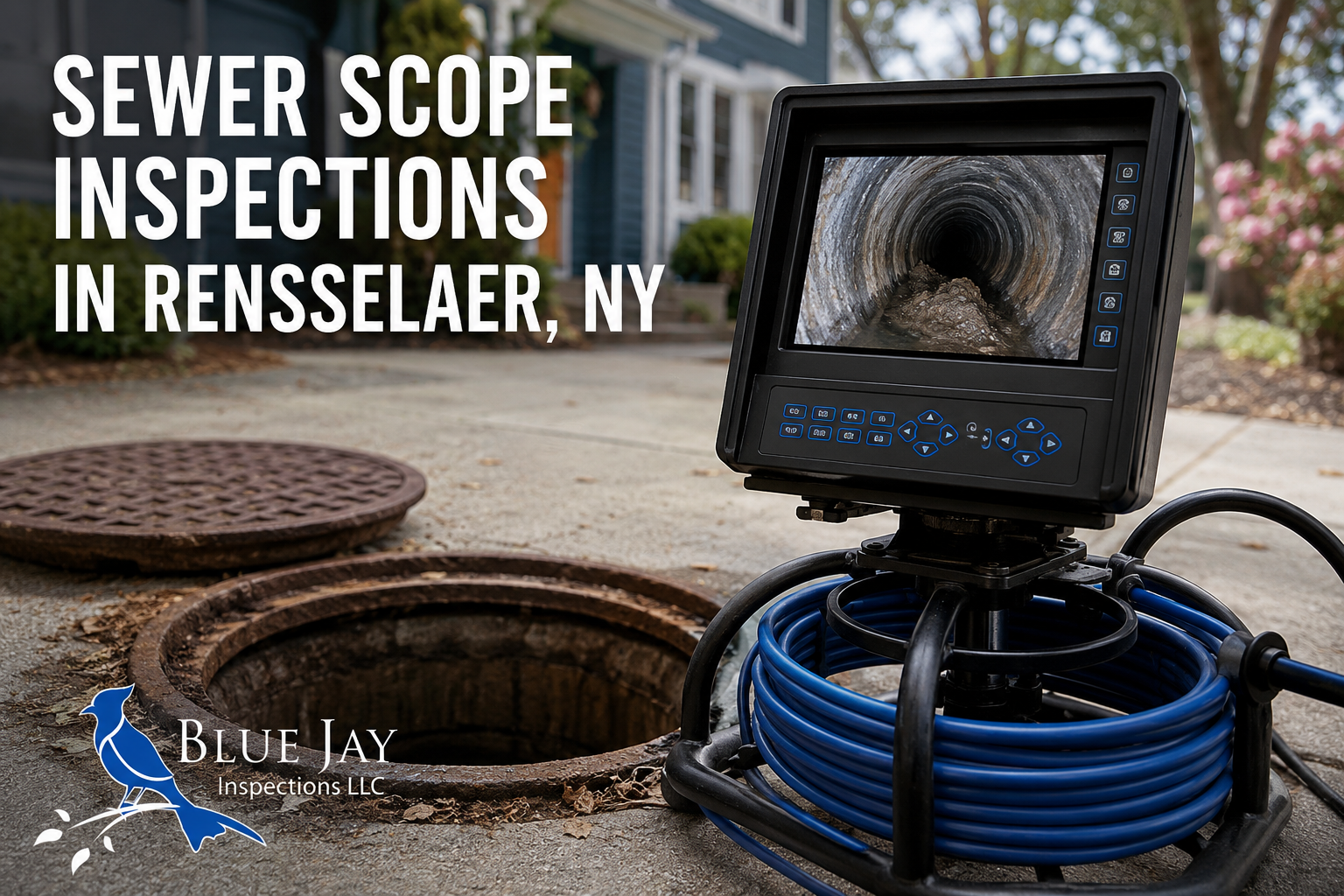
A sewer scope inspection involves inserting a high-resolution waterproof camera into the home’s sewer line through an accessible cleanout or drain opening. The camera travels through the pipe while the inspector evaluates the condition of the sewer lateral from the house to the municipal connection or septic system.
The inspection can identify:
- Tree root intrusion
- Pipe cracks or fractures
- Bellied or sagging sections
- Corroded cast iron piping
- Offset pipe joints
- Collapsed sewer lines
- Grease buildup and blockages
- Foreign objects in the line
- Improper repairs
- Aging Orangeburg pipe deterioration
Many sewer line defects develop slowly over years and may not show symptoms during a normal walkthrough of the property.
Why Sewer Scope Inspections Matter in Rensselaer, NY
Rensselaer and surrounding communities contain many older homes with aging underground infrastructure. Sewer lines in homes built decades ago may contain outdated materials that are vulnerable to failure.
Common Sewer Pipe Materials Found in Older Homes
| Pipe Material | Common Issues |
|---|---|
| Cast Iron | Corrosion, scaling, collapse |
| Clay Tile | Root intrusion, cracking |
| Orangeburg | Deformation, deterioration |
| Concrete | Cracking and shifting |
| Older PVC | Improper slopes or separations |
In areas such as:
- Rensselaer
- East Greenbush
- North Greenbush
- Troy
- Watervliet
- Cohoes
- Albany
- Schenectady
- Waterford
- Bethlehem
many homes were built long before modern sewer standards existed.
Even homes that appear well-maintained can have hidden underground sewer problems.
What Problems Can a Sewer Scope Find?
Tree Root Intrusion
Tree roots naturally seek moisture and can enter tiny openings in sewer pipes. Once inside, roots expand and create blockages or pipe damage.
This is extremely common in older neighborhoods throughout the Capital Region where mature landscaping surrounds homes.
Pipe Belly or Sagging
A sewer line may develop a low spot called a “belly” where water and waste collect instead of flowing properly.
Over time, this can lead to recurring backups and clogs.
Cracked or Broken Sewer Lines
Ground movement, freezing conditions, poor installation, or aging materials can crack underground piping.
New York freeze-thaw cycles can contribute to pipe movement and joint separation.
Collapsed Sewer Lines
Severe deterioration or root intrusion can eventually cause partial or full pipe collapse.
Repairs can cost thousands—or even tens of thousands—of dollars depending on excavation needs.
Offset Pipe Joints
Sections of sewer pipe can shift over time, creating edges where debris catches and blockages form.
This issue is common in older clay or concrete systems.
Why a Standard Home Inspection Usually Won’t Find Sewer Problems
A standard home inspection does not include scoping underground sewer lines unless specifically requested as an additional service.
The home’s plumbing fixtures may appear to drain normally during the inspection while hidden defects remain underground.
Some sewer issues only become apparent under heavy use conditions.
That means a buyer could move into the home and discover expensive sewer repairs weeks later.
How Much Can Sewer Repairs Cost in Rensselaer, NY?
Sewer line repairs can vary significantly depending on the problem and accessibility.
| Sewer Problem | Potential Cost Range |
|---|---|
| Minor root cleaning | $300–$800 |
| Spot repair | $1,500–$4,000 |
| Full sewer line replacement | $5,000–$20,000+ |
| Excavation under driveway or street | Significantly higher |
A sewer scope inspection is relatively inexpensive compared to the potential repair costs it may uncover.
When Should You Get a Sewer Scope Inspection?
Older Homes
Homes built before the 1980s are strong candidates for sewer scope inspections.
Homes With Large Trees
Roots are one of the leading causes of sewer line failure.
Homes Vacant for Long Periods
Unused systems may develop unnoticed issues.
Recurring Drain Problems
Slow drains, backups, or sewer odors may indicate underlying sewer defects.
Before Listing a Home
Some sellers choose pre-listing sewer inspections to avoid surprises during negotiations.
What Happens During the Inspection?
The sewer scope process is typically straightforward and non-invasive.
Step 1: Locate Access Point
The inspector accesses the sewer line through a cleanout or drain opening.
Step 2: Insert Sewer Camera
A specialized sewer camera is fed through the line.
Step 3: Evaluate the Pipe
The inspector observes the pipe interior in real time while documenting defects.
Step 4: Review Findings
The client receives an explanation of findings along with recommendations for further evaluation or repair if needed.
Sewer Scope Inspections for Real Estate Transactions
For Homebuyers
A sewer scope provides valuable information before closing.
Buyers may:
- Negotiate repairs
- Request credits
- Plan for future maintenance
- Avoid unexpected repair bills
For Real Estate Agents
Sewer scopes help reduce transaction surprises and post-sale disputes.
For Sellers
Pre-listing sewer inspections can help identify issues early and improve buyer confidence.
Sewer Scope vs. Septic Inspection
These are different inspections.
| Sewer Scope Inspection | Septic Inspection |
|---|---|
| Evaluates sewer lateral pipe | Evaluates septic system |
| Typically municipal sewer homes | Typically rural homes |
| Uses sewer camera | May include tank pumping and system evaluation |
| Focuses on underground piping | Focuses on wastewater treatment system |
Some homes in rural portions of Rensselaer County may require septic inspections instead of sewer scopes.
Why Choose Blue Jay Inspections for Sewer Scope Inspections in Rensselaer, NY?
Blue Jay Inspections provides professional sewer scope inspections throughout:
- Rensselaer
- Albany
- Troy
- Schenectady
- Saratoga Springs
- Clifton Park
- East Greenbush
- Bethlehem
- Colonie
- Malta
- Ballston Spa
- Niskayuna
- Rotterdam
- Waterford
- And surrounding Capital Region communities
In addition to sewer scopes, Blue Jay Inspections offers:
- Home inspections
- Septic inspections
- Termite/WDI inspections
- NYS mold assessments and clearances
- Water quality testing
- Well flow testing
The goal is to help buyers, sellers, and agents make informed real estate decisions with accurate, professional information.
Final Thoughts
A sewer line is one of the most expensive hidden systems in a home—and one of the easiest to overlook during a real estate transaction.
In Rensselaer, NY and throughout the Capital Region, older infrastructure, mature trees, and aging pipe materials make sewer scope inspections especially valuable.
For a relatively small investment, a sewer scope inspection can help prevent major repair surprises and provide peace of mind before closing on a home.