
How They Differ
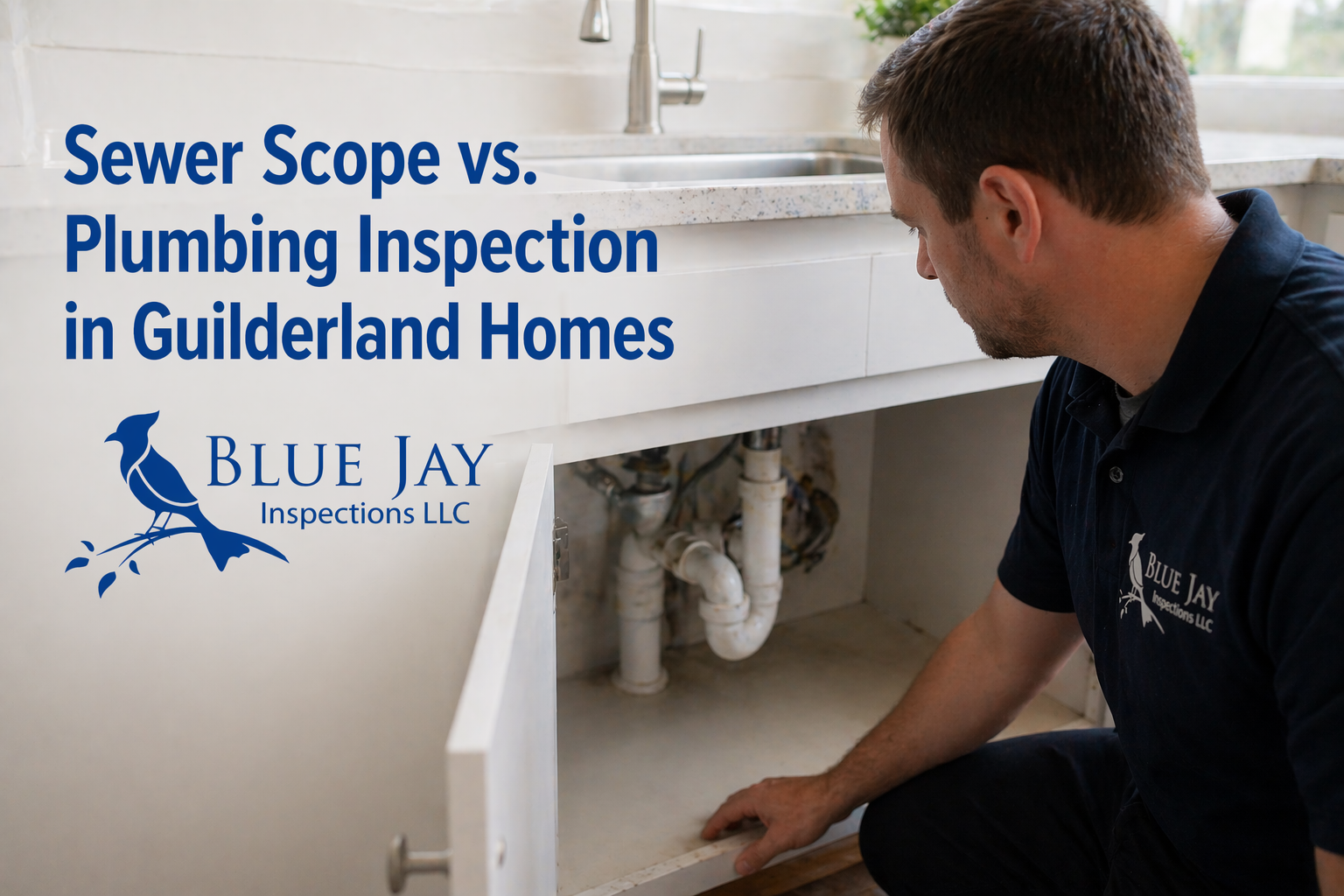
A plumbing inspection evaluates the visible and accessible water supply and drainage systems inside the home, while a sewer scope uses a specialized camera to inspect the underground sewer line from the house to the municipal connection or septic system. Homebuyers in Guilderland should strongly consider both, as they assess different parts of the system and uncover different types of risks.
Why This Matters for Guilderland Homebuyers
In Guilderland and surrounding areas like Altamont, Rotterdam, Schenectady, and Colonie, many homes—especially older properties—have:
- Aging plumbing systems
- Original sewer lines (often clay or cast iron)
- Tree-lined lots that increase root intrusion risk
These conditions make it critical to understand both the interior plumbing and the buried sewer line before closing on a home.
What Is a Plumbing Inspection?
A plumbing inspection focuses on the home’s internal water and drain systems. It is typically included in a standard home inspection but can also be evaluated in more detail if needed.
What a Plumbing Inspection Covers
- Water supply lines (copper, PEX, galvanized steel)
- Drain, waste, and vent piping (DWV systems)
- Fixtures (sinks, toilets, showers, tubs)
- Water heater condition and operation
- Visible leaks or corrosion
- Water pressure and flow
What It Does NOT Cover
- Underground sewer lines beyond the home
- Hidden piping inside walls (unless visible signs exist)
What Is a Sewer Scope?
A sewer scope is a camera inspection of the main sewer line that runs from the house to the street or septic system.
A small waterproof camera is inserted into a cleanout or drain line and pushed through the pipe to identify issues that cannot be seen otherwise.
What a Sewer Scope Can Detect
- Tree root intrusion
- Cracks, breaks, or collapsed pipes
- Blockages or buildup (grease, debris, scale)
- Pipe material and condition
- Bellies (low spots where waste collects)
Key Differences: Sewer Scope vs. Plumbing Inspection
| Feature | Plumbing Inspection | Sewer Scope |
|---|---|---|
| Area Covered | Inside the home | Underground sewer line |
| Method | Visual + functional testing | Camera inspection |
| Included in Standard Inspection | Yes | Usually optional |
| Detects Leaks | Yes | No |
| Detects Sewer Line Damage | No | Yes |
| Cost Range | Included or low add-on | Separate service |
Why You Need Both in Guilderland
1. Hidden Sewer Problems Are Expensive
Sewer line repairs can range from several thousand to tens of thousands of dollars, especially if excavation is required.
A home can pass a plumbing inspection but still have a failing sewer line.
2. Older Homes Are Higher Risk
In Guilderland neighborhoods with mature trees and older infrastructure, sewer lines may be:
- Clay pipes prone to cracking
- Cast iron pipes subject to corrosion
- Orangeburg pipes (found in mid-century homes) that can collapse
3. Tree Roots Are Common
Tree-lined properties in areas like Altamont and McKownville often experience:
- Roots entering small pipe cracks
- Recurring blockages
- Gradual pipe damage over time
4. Plumbing Issues Don’t Tell the Whole Story
A home may have:
- Good water pressure
- No visible leaks
- Properly functioning fixtures
…but still have a severely damaged sewer line underground.
When Should You Get a Sewer Scope?
You should strongly consider adding a sewer scope if:
- The home is 20+ years old
- There are large trees near the property
- The home has a history of slow drains or backups
- You are purchasing a home in Guilderland or nearby towns with older infrastructure
- The property uses a septic system
What Happens If Problems Are Found?
If a sewer scope reveals issues, buyers have options:
Negotiate Repairs
Request the seller repair or replace the sewer line before closing.
Ask for a Credit
Receive a credit to handle repairs after purchase.
Further Evaluation
Bring in a sewer contractor for repair estimates.
Common Sewer Line Problems in Guilderland Homes
| Problem | Description | Impact |
|---|---|---|
| Root Intrusion | Roots enter through pipe joints | Blockages and pipe damage |
| Pipe Collapse | Structural failure of pipe | Complete system failure |
| Bellied Pipe | Sagging section holds waste | Recurring clogs |
| Corrosion | Deterioration of metal pipes | Leaks and eventual failure |
How the Sewer Scope Process Works
A professional inspection company like Blue Jay Inspections typically follows these steps:
1. Access the Line
Camera is inserted through a cleanout or accessible drain.
2. Run the Camera
The camera travels through the sewer line, recording video.
3. Identify Issues
Inspector notes defects, blockages, and pipe condition.
4. Provide Video & Report
Buyers receive clear documentation for decision-making and negotiations.
Cost vs. Risk: Why It’s Worth It
While a sewer scope is an additional service, it offers high value compared to potential repair costs.
| Service | Typical Cost | Potential Savings |
|---|---|---|
| Sewer Scope | Relatively low add-on | Avoid $5,000–$20,000+ repairs |
| Plumbing Inspection | Included | Identifies interior issues |
Tips for Guilderland Homebuyers
- Always ask if a sewer scope is available as an add-on
- Don’t assume newer homes are risk-free
- Review sewer scope video, not just the summary
- Factor potential repairs into your offer
- Work with a local inspector familiar with Guilderland conditions
Why Choose a Local Inspection Company
A local company like Blue Jay Inspections understands:
- Guilderland’s mix of older and newer homes
- Common pipe materials used in the region
- Local soil and tree conditions affecting sewer lines
- Real estate timelines in the Capital Region
Final Thoughts
A plumbing inspection and a sewer scope serve two very different—but equally important—roles in evaluating a home.
In Guilderland, where aging infrastructure and environmental factors can impact underground systems, relying on just one inspection leaves a major gap.
For the most complete picture, smart homebuyers include both.