
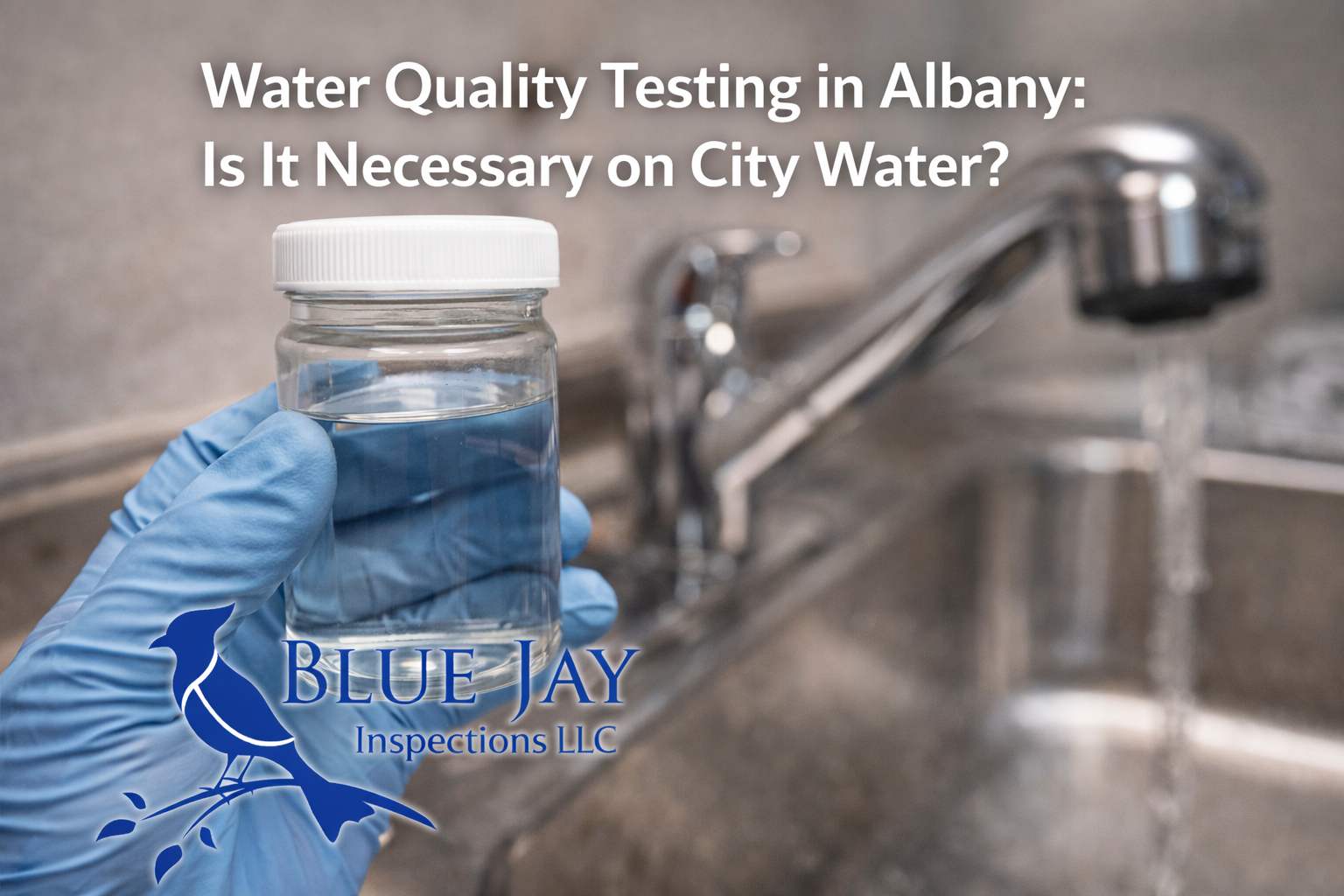
The Short Answer
Yes—water quality testing is still recommended even for homes on Albany city water. While municipal water is treated and regulated, issues can arise from aging plumbing, service lines, local contamination, or building-specific conditions. Testing provides confirmation that the water inside the home—not just at the treatment plant—is safe.
How Albany City Water Is Regulated
Homes in Albany, Troy, Schenectady, Cohoes, Watervliet, and surrounding municipalities typically receive water from public systems regulated under:
- EPA Safe Drinking Water Act (SDWA)
- New York State Department of Health (NYSDOH)
Municipal providers routinely test for:
- Bacteria (E. coli, coliform)
- Lead and copper (at system level)
- Disinfection byproducts
- Nitrates and other contaminants
Important Limitation
These tests are conducted at the source and distribution system—not inside your specific home.
Why Water Testing Is Still Important for Homebuyers
Even if the water supply is compliant at the municipal level, several factors can affect water quality by the time it reaches your faucet.
1. Aging Pipes and Service Lines
Many homes in Albany, Schenectady, Troy, and Rensselaer—especially older properties—may have:
- Lead service lines
- Galvanized steel pipes
- Corroded interior plumbing
These can introduce:
- Lead
- Iron and rust
- Sediment
2. Lead Risk in Older Homes
Albany and surrounding areas like:
- Delmar, Glenmont, Bethlehem
- Scotia, Rotterdam, Niskayuna
- Watervliet, Cohoes
…have housing stock built before modern plumbing standards.
Even if the city treats water properly, lead can leach from pipes, solder, or fixtures inside the home.
3. Localized Contamination Issues
Water quality can vary by neighborhood due to:
- Pipe repairs or disturbances
- Changes in water chemistry
- Nearby construction
Temporary or localized issues are not always reflected in system-wide reports.
4. Vacant or Recently Renovated Homes
Homes that have been vacant in areas like:
- Saratoga Springs, Clifton Park, Malta
- Latham, Loudonville, Colonie
…may have:
- Stagnant water
- Bacterial growth
- Metal leaching
Renovations can also introduce debris or contaminants into plumbing systems.
5. Peace of Mind for Buyers and Agents
For homebuyers and real estate professionals, water testing:
- Confirms safety at the point of use
- Helps avoid post-closing surprises
- Provides documentation for negotiations if issues are found
What Contaminants Should Be Tested?
For homes on city water in Albany County and surrounding areas, a standard water quality test often includes:
Core Tests
- Lead
- Total coliform bacteria
- E. coli
- Nitrates/Nitrites
Additional Recommended Tests
- Iron and manganese (common in older systems)
- pH and hardness
- Chlorine levels
- Volatile Organic Compounds (VOCs) (if concerns exist)
What a Water Test Can Reveal
A professional water test can identify:
| Issue | What It Means |
|---|---|
| Elevated lead | Potential health risk, often from plumbing |
| Bacteria presence | Possible contamination or stagnation |
| High iron/manganese | Affects taste, staining, and fixtures |
| Low or high pH | Corrosion or scaling risk |
| Chlorine imbalance | Treatment issues or taste concerns |
When Should You Test Water?
During a Real Estate Transaction
Testing is strongly recommended:
- During the inspection period
- Before finalizing the purchase
In Older Homes
Especially in homes built before the 1980s in:
- Albany
- Troy
- Schenectady
- Rensselaer
After Plumbing Changes
- New fixtures
- Pipe replacements
- Water heater installations
If You Notice Warning Signs
- Metallic taste
- Discoloration
- Odor
- Staining on fixtures
City Water vs. Well Water: Key Differences
| Factor | City Water | Well Water |
|---|---|---|
| Regulation | Regulated by EPA/NYSDOH | Not regulated |
| Testing Frequency | Done by municipality | Owner responsibility |
| Risk Source | Plumbing + distribution | Groundwater conditions |
| Buyer Testing | Recommended | Essential |
Even though city water is regulated, home-level testing is still a best practice.
What to Expect from Professional Water Testing
A professional inspection company (like Blue Jay Inspections) will typically:
- Collect samples using sterile procedures
- Send samples to a certified laboratory
- Provide clear, easy-to-read results
- Explain any findings and next steps
Turnaround times are usually 24–72 hours, depending on the test.
What Happens If a Problem Is Found?
Common solutions include:
For Lead
- Replace service lines or plumbing components
- Install certified filtration systems
For Bacteria
- Flush system
- Disinfect plumbing
- Identify contamination source
For Iron or Sediment
- Install filtration or softening systems
Key Takeaways for Albany-Area Homebuyers
- City water is regulated—but your home’s plumbing can still affect quality
- Older homes in Albany, Troy, and Schenectady have higher risk factors
- Water testing is a low-cost, high-value step during the buying process
- Results provide clarity, safety, and negotiation leverage
Schedule Water Testing with Blue Jay Inspections
Blue Jay Inspections provides professional water quality testing throughout:
Albany, Schenectady, Troy, Saratoga Springs, Clifton Park, Malta, Colonie, Guilderland, Bethlehem, Niskayuna, East Greenbush, Rotterdam, Scotia, Glenmont, Delmar, Voorheesville, Loudonville, Latham, Cohoes, Watervliet, Waterford, Halfmoon, Ballston Spa, Round Lake, Galway, Altamont, New Scotland, Gloversville, Johnstown, and surrounding areas.
If you’re buying a home—don’t assume, test.