
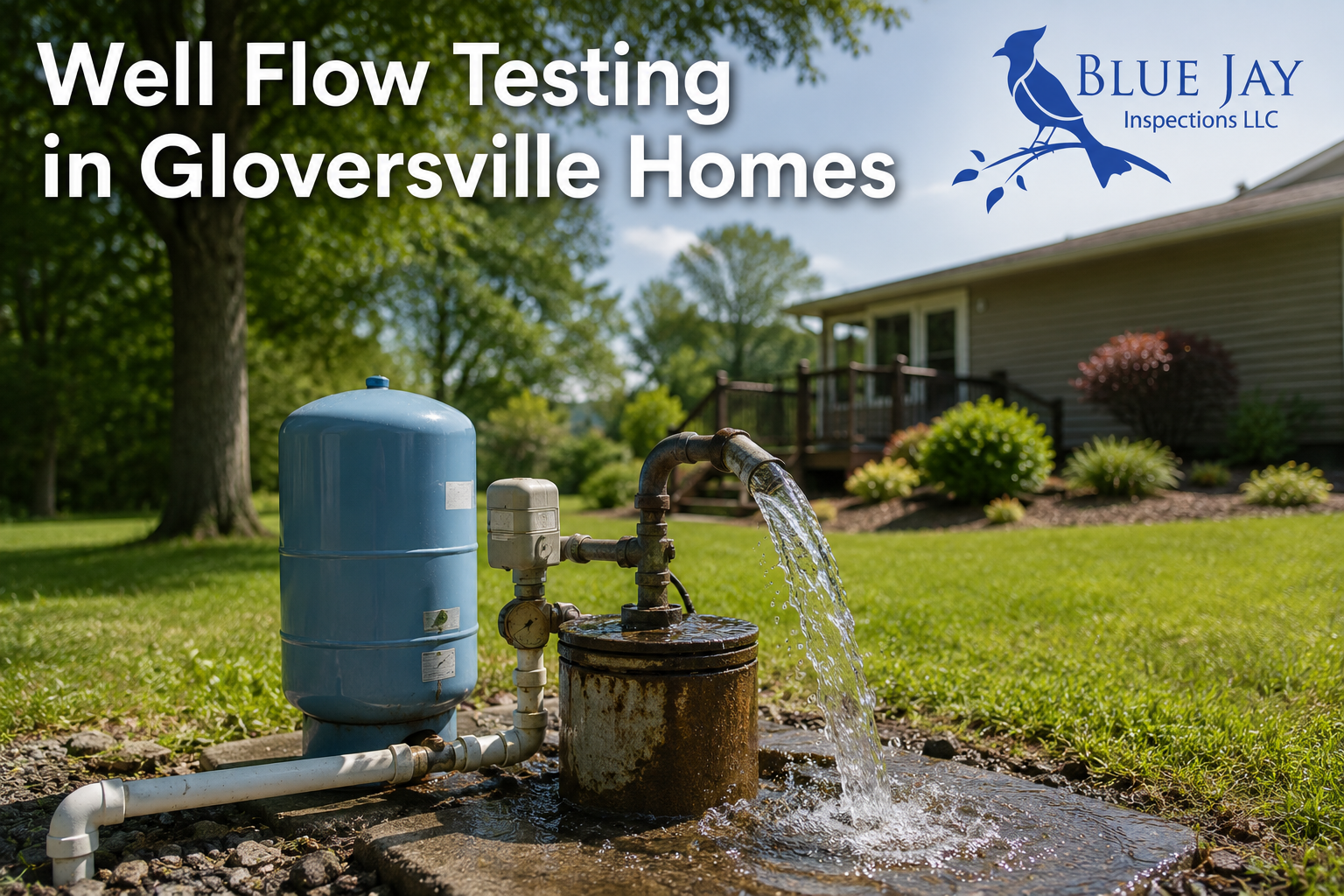
Benefits of a Well Flow Test
If you’re buying a home with a private well in Gloversville, NY, one of the most important tests you can perform is a well flow test. A well may produce clean water, but if it cannot provide enough water for daily household needs, it can quickly become a major problem after closing.
The short answer is simple: a well flow test measures how much water a well can deliver over time and helps determine whether the water supply is adequate for the home’s needs. For home buyers, it can reveal potential water supply issues that may not be obvious during a standard showing or home inspection.
In areas around Gloversville and throughout Fulton County, private wells are common. Because these homes are not connected to municipal water systems, buyers should understand the condition and performance of the property’s well before finalizing the purchase.
What Is a Well Flow Test?
A well flow test evaluates the amount of water a well can produce over a specific period of time.
The test is designed to answer a simple but critical question:
Can the well provide enough water for the household on a consistent basis?
A professional well flow test measures:
- Gallons per minute (GPM) produced by the well
- Water recovery rate
- Water pressure performance
- Ability to sustain household demand
- Potential signs of well or pump issues
The results help buyers understand whether the property’s water supply is likely to meet the needs of a typical family.
Why Well Flow Testing Matters in Gloversville
Many homes in Gloversville, Johnstown, Mayfield, Broadalbin, Caroga Lake, and surrounding areas rely on private wells.
Unlike homes connected to municipal water systems, these properties depend entirely on groundwater availability.
A well that appears to function normally during a brief home showing may experience problems such as:
- Low water production
- Seasonal shortages
- Pressure fluctuations
- Pump failures
- Slow recovery rates
These issues may not become obvious until the home is occupied full-time.
A flow test provides valuable information before closing so buyers can make informed decisions.
What Is Considered a Good Well Flow Rate?
Flow rates are typically measured in gallons per minute (GPM).
While requirements vary depending on household size and usage patterns, many lenders, inspectors, and industry professionals consider:
| Well Flow Rate | General Interpretation |
|---|---|
| Less than 1 GPM | Very Low Yield |
| 1-3 GPM | Marginal |
| 3-5 GPM | Acceptable for Some Homes |
| 5+ GPM | Generally Considered Adequate |
| 10+ GPM | Excellent Performance |
A lower-yield well is not necessarily a deal breaker.
Some homes successfully operate with lower-producing wells when combined with:
- Storage tanks
- Water management systems
- Low-demand household usage
However, buyers should fully understand any limitations before purchasing.
How Is a Well Flow Test Performed?
A professional flow test typically involves running water continuously while monitoring output and pressure.
The process generally includes:
Initial System Evaluation
Inspectors may evaluate:
- Wellhead condition
- Pressure tank
- Pressure switch
- Visible plumbing components
This helps identify obvious concerns before testing begins.
Measuring Water Output
Water is discharged at a controlled rate while inspectors measure:
- Gallons per minute
- Water pressure
- System performance
Monitoring Recovery
A critical part of the test involves observing how the well responds over time.
Inspectors look for:
- Pressure drops
- Reduced flow rates
- Signs of depletion
- Recovery performance
This helps determine whether the well can sustain normal household use.
Why a Home Inspection Is Not Enough
Many buyers assume a home inspection automatically evaluates the well.
In reality, a standard home inspection typically includes only a limited review of the visible water system components.
A home inspection generally does not determine:
- Long-term well production
- Recovery rate
- Sustainable yield
- Future water availability
A dedicated well flow test provides information that a general home inspection cannot.
Common Well Issues Found in Fulton County Homes
Aging Well Pumps
Many homes in the area rely on pumps that may be decades old.
Signs of pump problems include:
- Pressure fluctuations
- Reduced flow
- Intermittent water supply
- Excessive cycling
Low-Yield Wells
Some wells naturally produce less water due to local geology.
This may become more noticeable during:
- Summer drought conditions
- Extended household use
- High-demand periods
Pressure Tank Problems
A failing pressure tank can cause:
- Inconsistent water pressure
- Short cycling
- Increased pump wear
Mineral Buildup
Over time, minerals can accumulate in:
- Pipes
- Pressure tanks
- Fixtures
- Pumps
This buildup may reduce system performance.
Seasonal Water Table Changes
Groundwater levels naturally fluctuate throughout the year.
A well that performs adequately in spring may produce less water during prolonged dry periods.
Should Sellers Consider a Well Flow Test Before Listing?
In many situations, yes.
A pre-listing well flow test can:
- Identify issues before negotiations
- Reduce surprises during inspections
- Increase buyer confidence
- Demonstrate transparency
Providing documented well performance data may help streamline the transaction process.
Well Flow Testing vs. Water Quality Testing
These services evaluate different aspects of the water system.
| Well Flow Testing | Water Quality Testing |
| Measures quantity of water | Measures quality of water |
| Evaluates production rate | Evaluates contaminants |
| Assesses recovery performance | Tests for bacteria and chemicals |
| Examines water supply capability | Examines water safety |
For many home purchases involving private wells, both tests are recommended.
Additional Testing Buyers Should Consider
Water Quality Testing
Private wells should be tested for potential contaminants such as:
- Total coliform bacteria
- E. coli
- Nitrates
- Lead
- Other regionally relevant contaminants
Septic Inspection
Many homes with private wells also have private septic systems.
Evaluating both systems provides a more complete picture of the property’s infrastructure.
Sewer Scope Inspection
Where applicable, sewer scope inspections can identify hidden defects in underground drain lines.
Questions Buyers Should Ask About a Private Well
Before purchasing a home with a private well, consider asking:
How old is the well?
Older wells may require additional evaluation or upgrades.
How old is the pump?
Pump replacement can represent a significant expense.
Are maintenance records available?
Documentation often reveals how well the system has been maintained.
Has water quality testing been performed recently?
Water quality can change over time and should be verified.
Has a well flow test been completed?
Recent testing may provide valuable performance information.
Why Well Flow Testing Is Important for Home Buyers
A beautiful home can quickly become frustrating if the water supply cannot meet daily needs.
Low water pressure, inadequate production, and poor recovery rates can affect everything from showering and laundry to cooking and cleaning.
A professional well flow test helps buyers understand whether the property’s water supply is capable of supporting normal household use before they commit to the purchase.
For homes throughout Gloversville, Johnstown, Broadalbin, Mayfield, Caroga Lake, and surrounding Fulton County communities, well flow testing is an important part of the due diligence process.
Schedule a Well Flow Test in Gloversville, NY
Blue Jay Inspections provides professional well flow testing for home buyers, sellers, and real estate professionals throughout Gloversville and the surrounding area. Our testing helps clients better understand the performance of private well systems so they can make informed real estate decisions with confidence.
Contact Blue Jay Inspections today to schedule your well flow test before closing on your next home.