
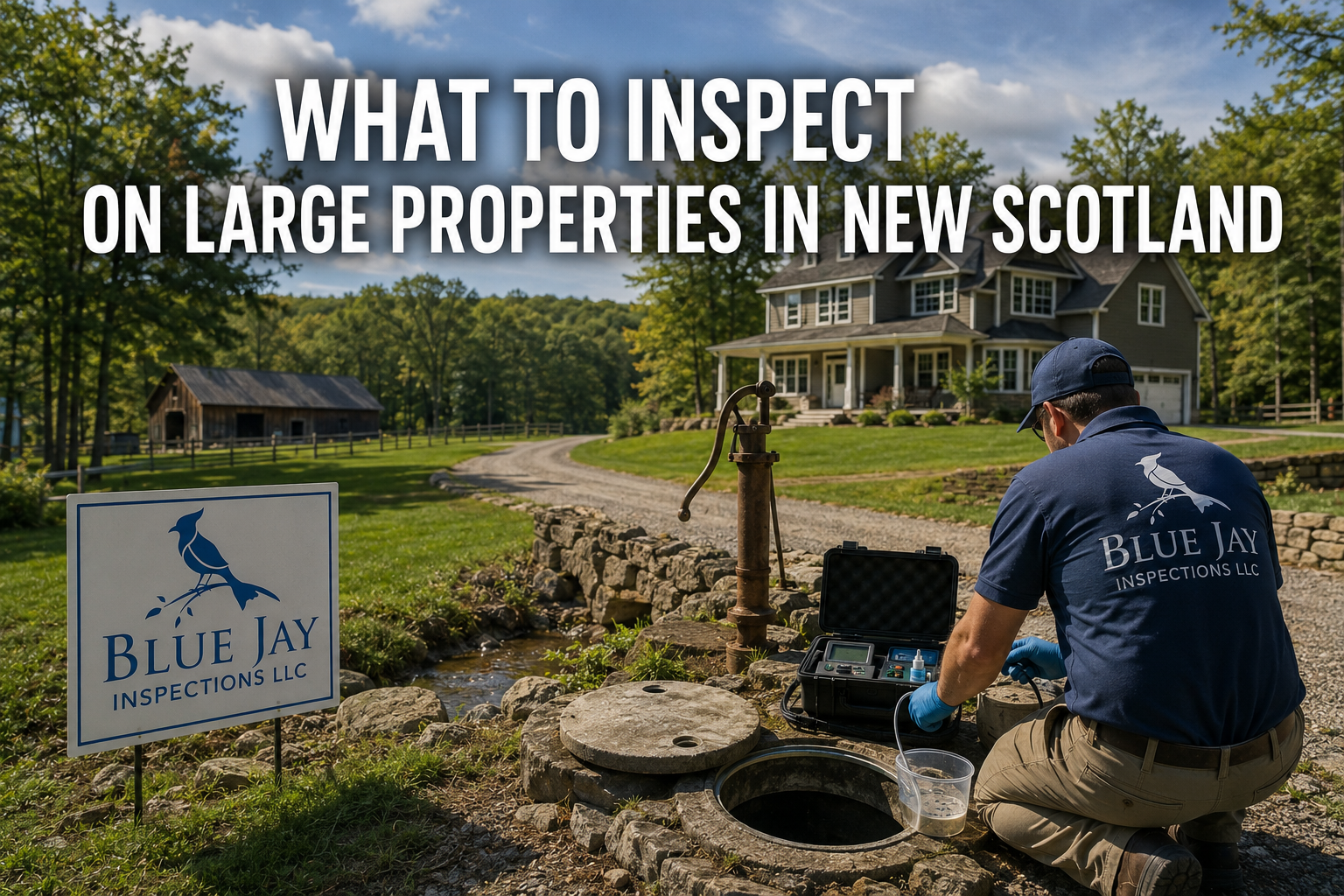
Large Properties Require More
Buying a large property in New Scotland, NY involves far more than evaluating the house itself. Rural and semi-rural properties throughout New Scotland, Voorheesville, Clarksville, Feura Bush, Knox, Westerlo, and surrounding Albany County communities often include extensive land, private utilities, outbuildings, drainage systems, wells, septic systems, barns, and long-term maintenance concerns that many buyers overlook.
A standard home inspection is essential, but larger properties frequently require additional evaluations to fully understand the condition of the property and avoid expensive surprises after closing.
Why Large Properties Require More Extensive Inspections
Large rural properties are more complex than typical suburban homes.
In addition to the main house, buyers may also inherit responsibility for:
- Private wells
- Septic systems
- Drainage infrastructure
- Retaining walls
- Long driveways
- Detached garages
- Barns and outbuildings
- Fencing
- Culverts
- Water management systems
- Wooded acreage
- Slopes and grading issues
Many of these components are expensive to repair or replace.
Problems may not be immediately visible during a brief showing, especially on properties with multiple acres.
Start With a Comprehensive Home Inspection
The Main Home Still Matters
The primary structure should always receive a thorough professional home inspection.
A comprehensive inspection evaluates:
- Roofing
- Foundation
- Structural framing
- Plumbing
- Electrical systems
- HVAC systems
- Insulation
- Windows and doors
- Exterior siding
- Drainage
- Moisture intrusion
- Safety concerns
On larger rural homes, inspectors often encounter:
- Aging systems
- Deferred maintenance
- Complex additions
- Older electrical upgrades
- Moisture management issues
Properties with multiple additions or renovations may require especially careful evaluation.
Septic System Inspections Are Essential
Many Large Properties Use Private Septic Systems
Most rural properties throughout New Scotland rely on private septic systems.
Septic failures are among the most expensive issues buyers can inherit.
Large properties may contain:
- Older septic systems
- Expanded household usage
- Undocumented repairs
- Improper modifications
- Aging drain fields
Some properties may also have guest houses or converted outbuildings connected to the system.
What Septic Inspections Evaluate
A professional septic inspection may include:
- Locating the tank
- Opening and evaluating the tank
- Measuring sludge levels
- Inspecting baffles
- Evaluating drain field conditions
- Hydraulic load testing
- Checking for leaks or backups
Because septic systems are underground, major problems may remain hidden without inspection.
Well Inspections and Water Testing Matter on Rural Properties
Private Wells Are Common in New Scotland
Many homes in the area rely on private wells for water supply.
Well-related concerns can include:
- Low flow rates
- Poor recovery
- Contaminated water
- Aging pumps
- Pressure problems
- Sediment intrusion
A property may appear fully functional during a showing while still having underlying well performance issues.
Well Flow Testing Helps Evaluate Reliability
A professional well flow test measures:
- Gallons per minute output
- Pump performance
- Pressure consistency
- Recovery capability
This is especially important on:
- Larger homes
- Multi-bathroom properties
- Hobby farms
- Properties with irrigation systems
- Homes with livestock water demands
Water Quality Testing Should Never Be Overlooked
Private well owners are responsible for their own water safety.
Testing may evaluate:
- Coliform bacteria
- E. coli
- Nitrates
- Arsenic
- Iron
- Manganese
- Hardness
- pH balance
- Additional contaminants
Rural groundwater conditions vary substantially throughout Albany County.
Inspect Drainage and Grading Carefully
Water Management Is Critical on Large Properties
Drainage problems can create major long-term damage.
Large rural properties often contain:
- Sloped terrain
- Seasonal runoff
- Wet areas
- Retaining walls
- Long drainage paths
- Culverts
- Swales
- Ditches
Improper drainage may contribute to:
- Basement water intrusion
- Foundation settlement
- Septic problems
- Erosion
- Driveway washouts
Signs of Drainage Problems
Inspectors often look for:
- Standing water
- Soil erosion
- Foundation staining
- Sump pump activity
- Settling areas
- Washed-out gravel
- Improper grading slopes
Drainage repairs on large properties can become expensive quickly.
Outbuildings and Barns Should Be Evaluated
Detached Structures Often Have Hidden Problems
Large properties frequently include:
- Barns
- Workshops
- Detached garages
- Storage buildings
- Pole barns
- Horse facilities
These structures may have:
- Structural deterioration
- Roof leaks
- Electrical hazards
- Rot
- Insect damage
- Foundation settlement
Some buyers focus entirely on the main home while overlooking expensive outbuilding repairs.
Barn Inspections Are Especially Important
Older barns may develop:
- Failing beams
- Sagging roofs
- Moisture damage
- Unsafe wiring
- Structural shifting
If livestock use is planned, buyers should carefully evaluate:
- Water availability
- Drainage
- Ventilation
- Structural stability
Long Driveways Can Create Major Expenses
Rural Driveways Require Maintenance
Long driveways are common throughout New Scotland and surrounding rural communities.
Potential concerns include:
- Drainage failures
- Erosion
- Cracking
- Potholes
- Culvert failures
- Poor grading
Replacing or repairing long driveways can become extremely costly.
Inspectors often evaluate:
- Surface condition
- Drainage flow
- Retaining edges
- Washout risks
Sewer Scope Inspections May Still Be Valuable
Some Larger Properties Connect to Sewer Systems
Not all large properties use septic systems.
Where sewer connections exist, sewer scope inspections can help identify:
- Tree root intrusion
- Cracked piping
- Bellied sewer lines
- Collapsed sections
- Offset joints
Underground sewer repairs can involve extensive excavation costs.
Mold and Moisture Assessments Matter on Rural Homes
Rural Homes Often Face Higher Moisture Exposure
Properties surrounded by wooded areas or uneven terrain may experience:
- Basement humidity
- Crawlspace moisture
- Condensation
- Drainage-related mold growth
- Poor ventilation
Older homes may also contain:
- Hidden leaks
- Insulation deficiencies
- Ventilation problems
Mold Isn’t Always Visible
Potential mold growth areas include:
- Attics
- Crawlspaces
- Basements
- Behind finished walls
- Around plumbing
Professional mold assessments help identify hidden moisture concerns before they worsen.
Inspect Fencing and Property Boundaries
Fencing Repairs Can Be Expensive
Large properties often include extensive fencing for:
- Livestock
- Privacy
- Security
- Property boundaries
Inspectors may evaluate:
- Structural stability
- Rot
- Leaning sections
- Gate operation
- Post deterioration
Boundary concerns may also warrant a land survey.
Wooded Acreage Comes With Additional Considerations
Trees Can Create Hidden Risks
Large wooded lots may contain:
- Dead trees
- Leaning trees
- Storm damage
- Root intrusion risks
- Drainage interference
Tree-related hazards can threaten:
- Homes
- Septic systems
- Wells
- Driveways
- Utility lines
Heavily wooded properties may require ongoing maintenance planning.
Older Rural Properties Often Have Deferred Maintenance
Large Properties Require Ongoing Investment
Many rural homes in New Scotland were built decades ago and may have:
- Aging infrastructure
- Piecemeal renovations
- Older mechanical systems
- DIY modifications
- Deferred repairs
The larger the property, the greater the maintenance responsibility.
A thorough inspection helps buyers understand both immediate concerns and long-term ownership costs.
Why Buyers Should Never Rush Large Property Purchases
Large rural properties may look beautiful during:
- Dry weather
- Summer conditions
- Short showings
However, hidden problems often emerge later.
Comprehensive inspections help buyers:
- Make informed decisions
- Budget accurately
- Negotiate repairs
- Avoid major surprises
- Understand maintenance obligations
Skipping inspections can expose buyers to significant financial risk.
Local Knowledge Matters in New Scotland
Properties throughout New Scotland and surrounding Albany County communities often present unique challenges tied to:
- Rural terrain
- Groundwater conditions
- Septic system variability
- Seasonal moisture
- Older infrastructure
- Agricultural land use
Inspectors familiar with local rural properties understand the common issues affecting homes throughout:
- New Scotland
- Voorheesville
- Clarksville
- Feura Bush
- Knox
- Westerlo
- Berne
- Altamont
This regional experience helps buyers receive more accurate evaluations and practical recommendations.
Protect Your Investment Before Closing
Buying a large property involves far more than evaluating cosmetic appearance. Rural homes and acreage properties often include complex systems and hidden maintenance concerns that require careful professional evaluation.
Blue Jay Inspections provides comprehensive home inspections, septic inspections, well flow testing, water quality testing, sewer scope inspections, mold assessments, and WDI inspections throughout New Scotland and surrounding Upstate New York communities.
A thorough inspection process helps buyers understand the true condition of large rural properties before closing.